
Deco Deco
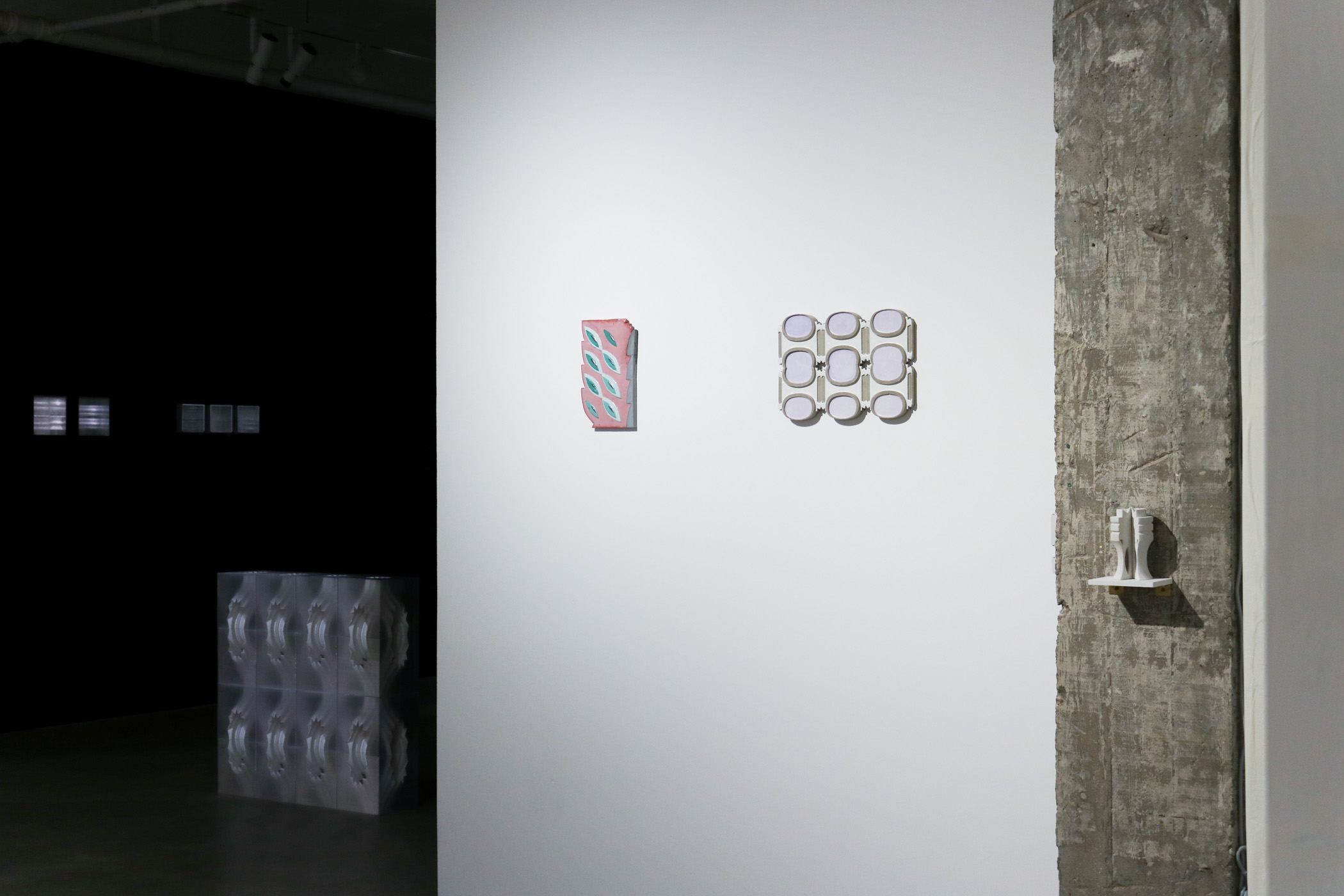
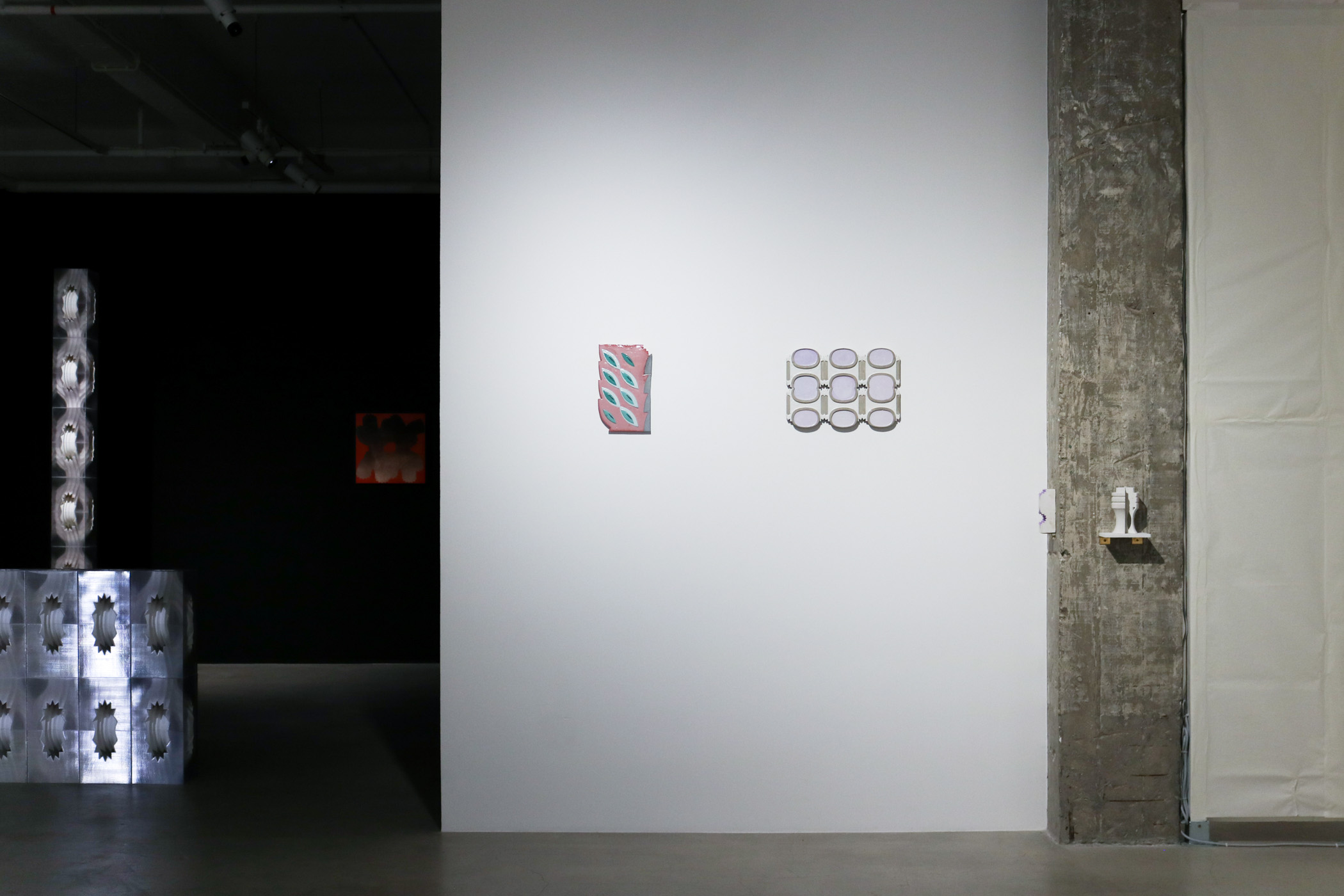
Deco, deco, decodeco. Repeated aloud, the words take on a clipped rhythm and a playful decorative quality. Dakou, borrowed from the title of Zheng Ke’s performance, echoes deco in sound. The exhibition’s ya (丫) comes from the branching forms of Ou Xiaotong’s sculptures. Used in several of her work titles, the character also recalls the Y-shaped structural components used in 3D printing.
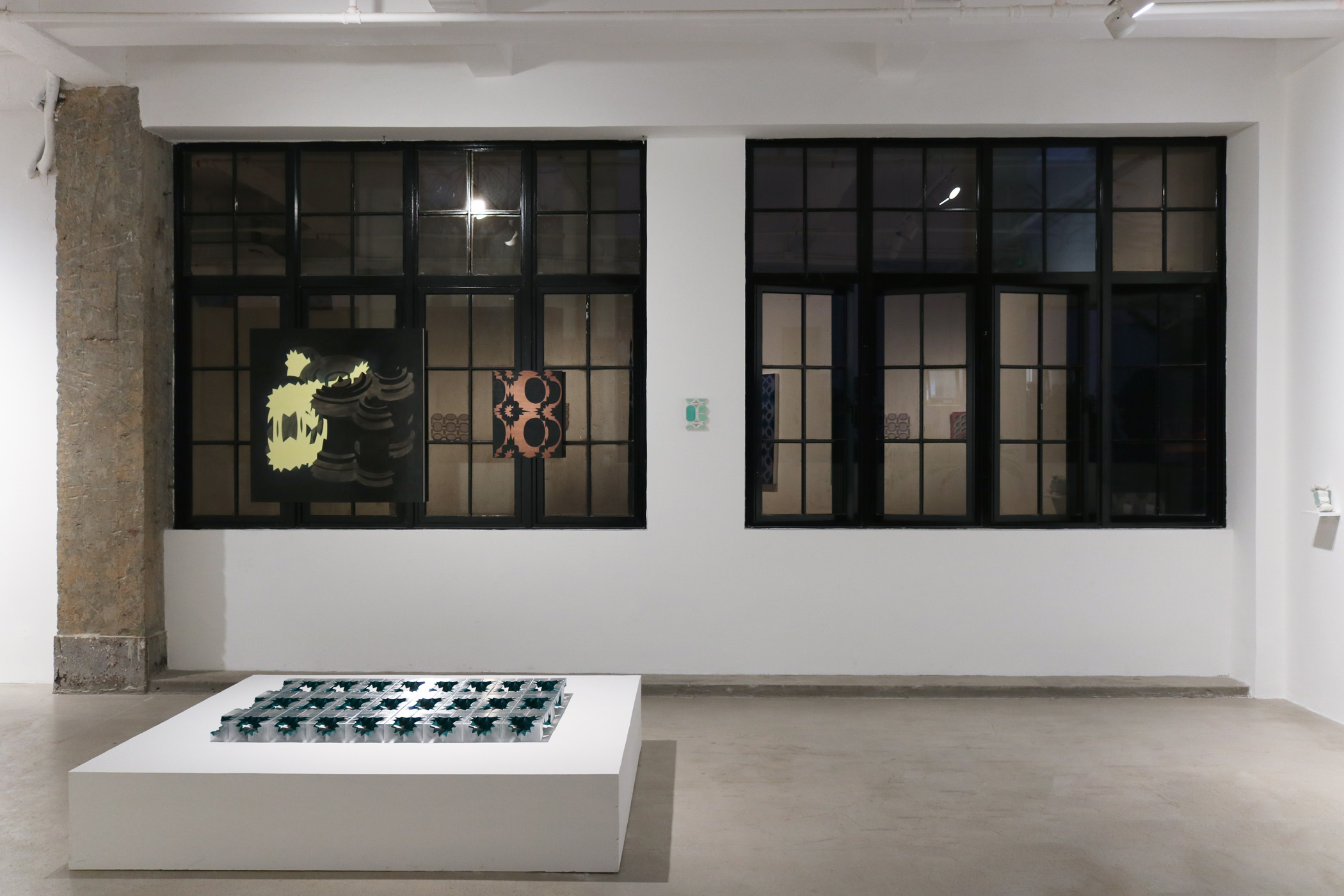
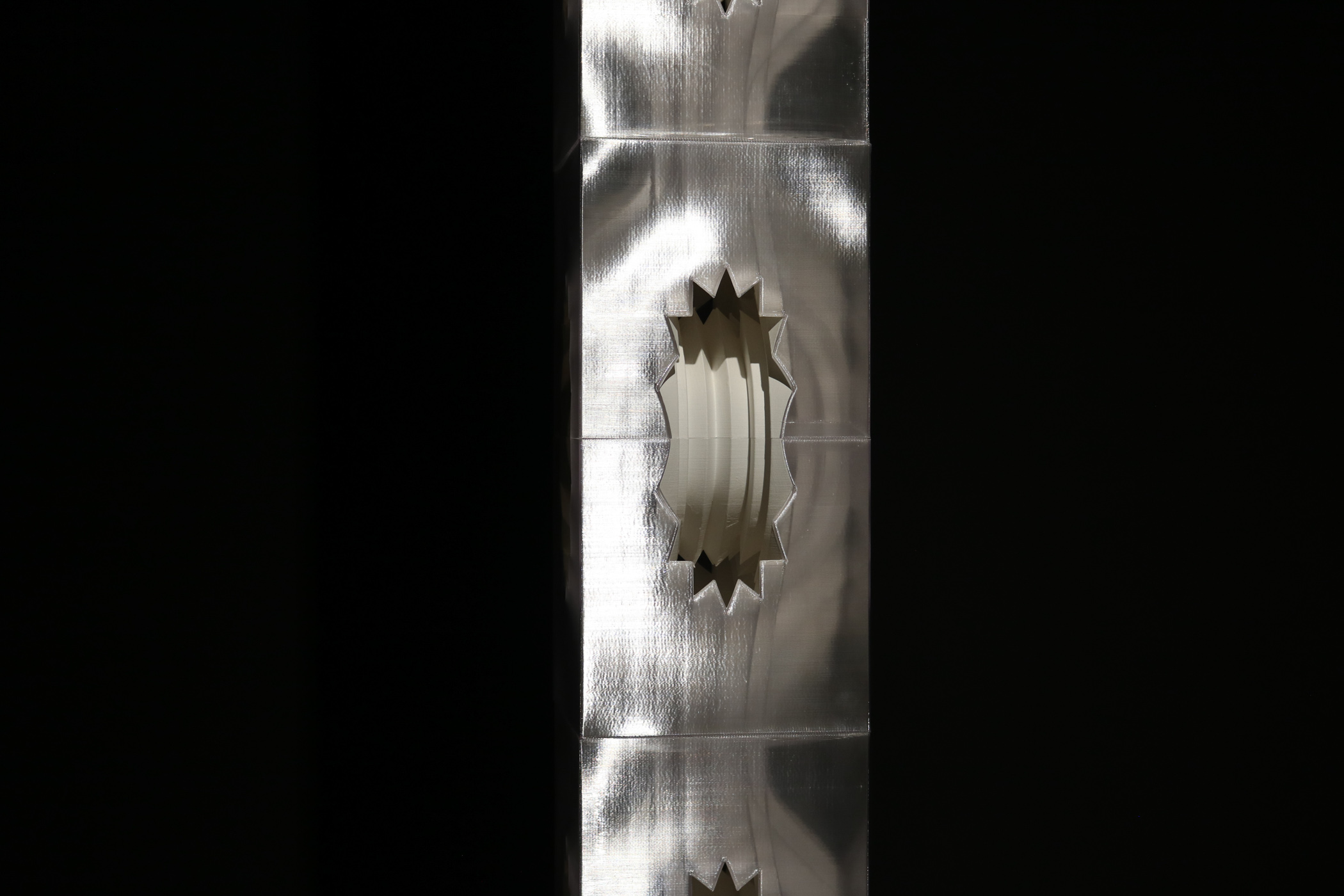
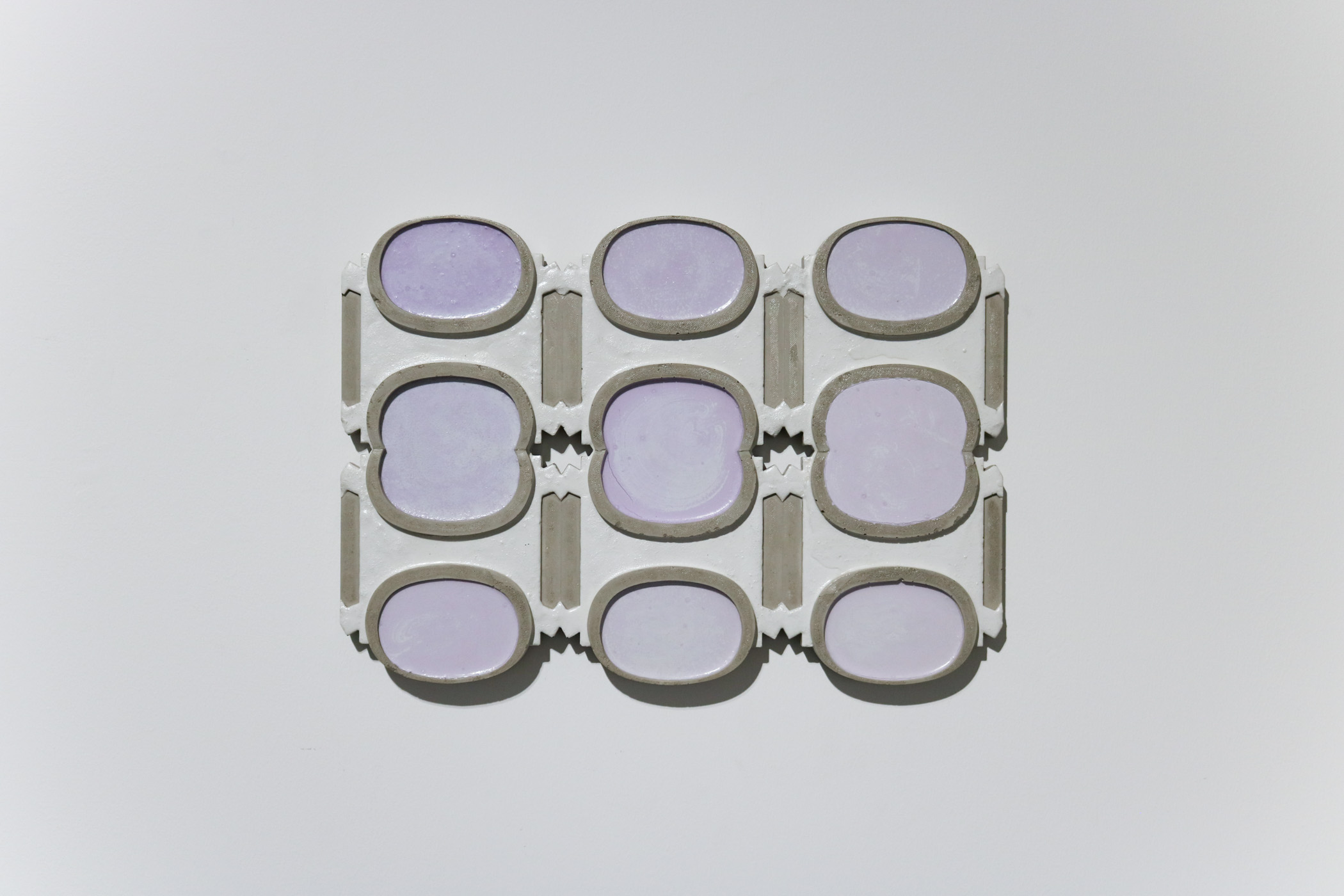
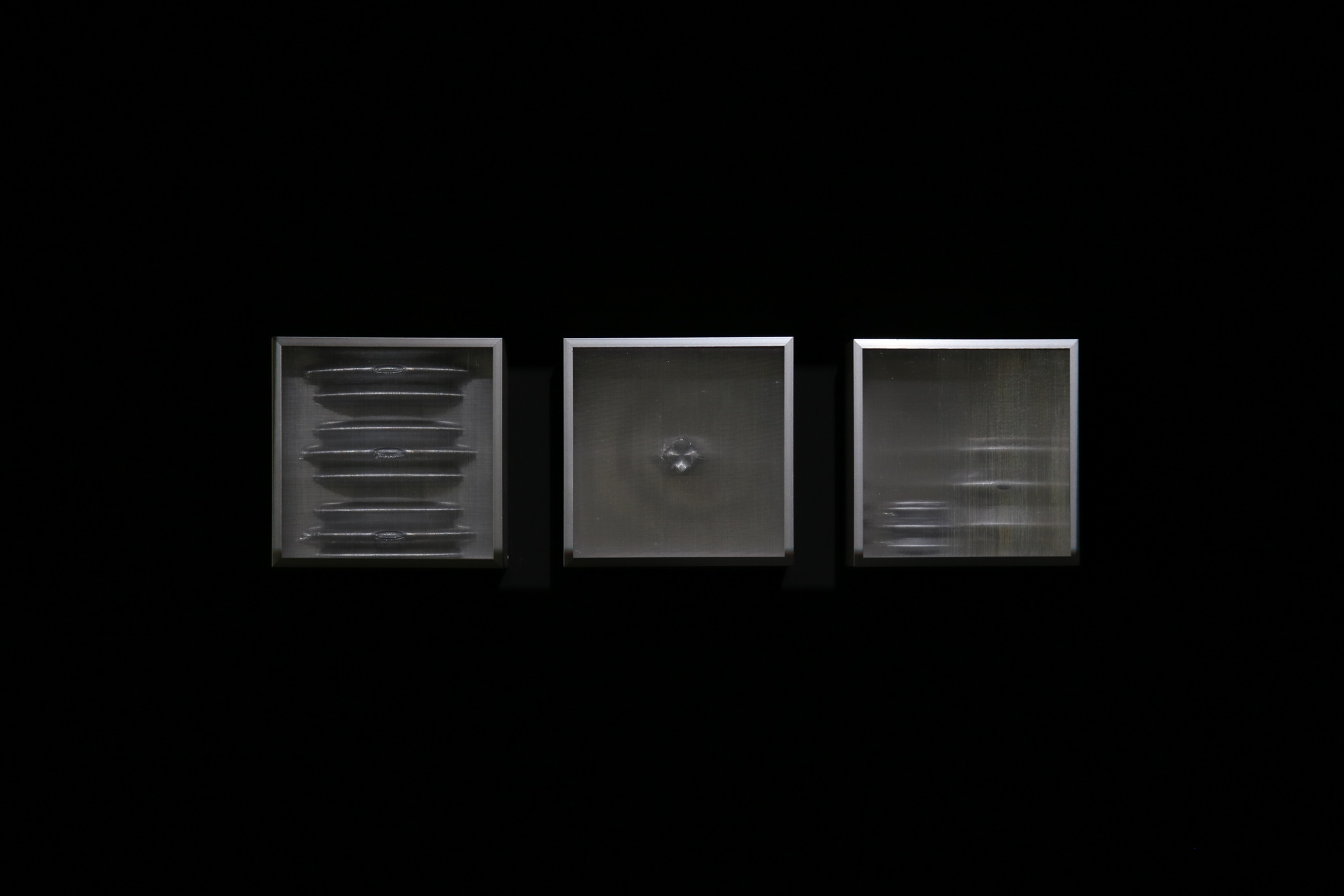
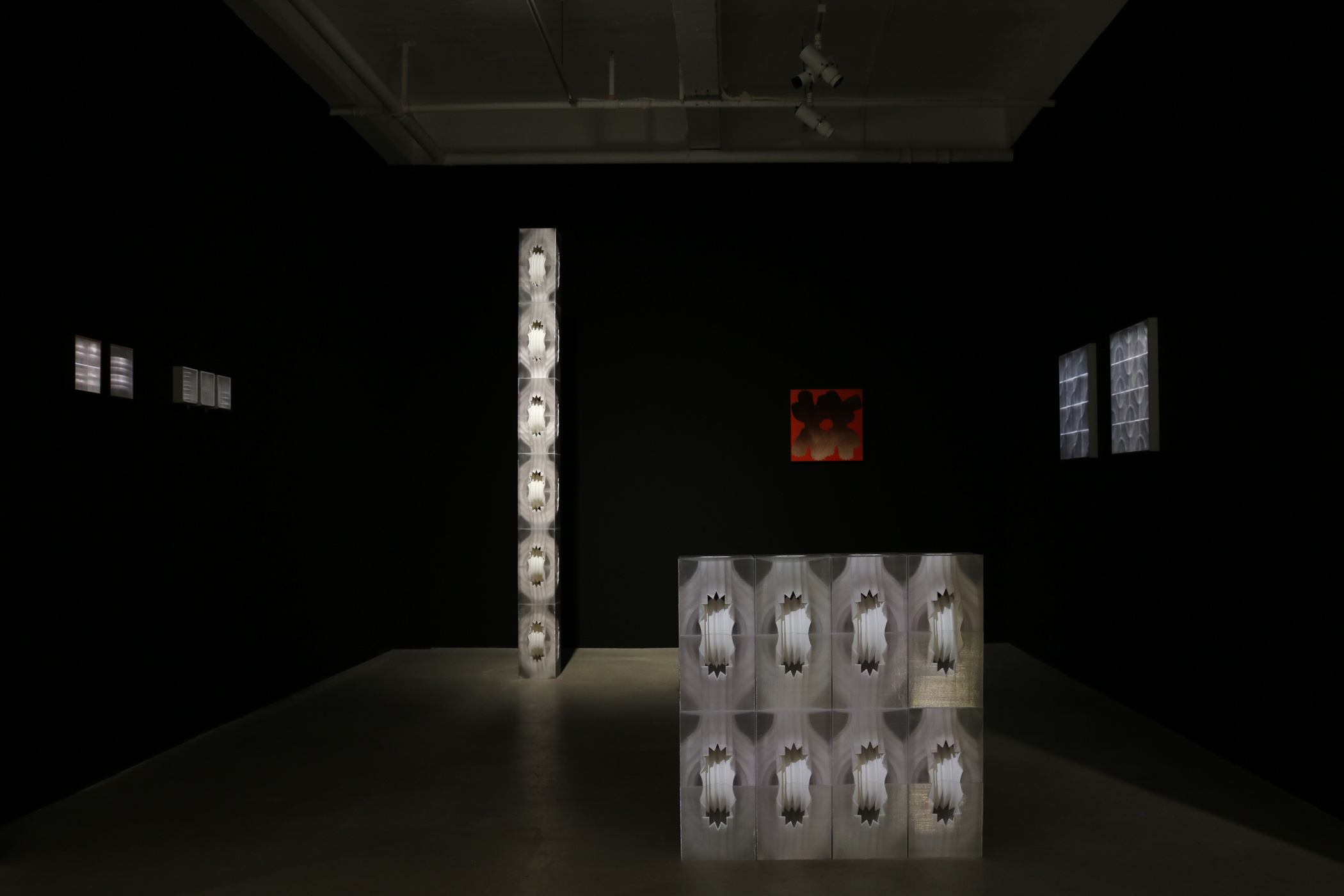
This branching also runs through Ou’s working process. A profile is stretched and bent; a portion is then extracted, rotated or compressed to produce another form. In Ya 2 and Ya 3, similar units are joined vertically, their grooves and curved surfaces creating an undulating rhythm. Using modified Bambu Lab equipment, she turns digital models into plastic objects that have weight and require support. Forms that work within a digital model must contend with gravity, material properties and fabrication errors when physically produced. These conditions inform her further adjustments.
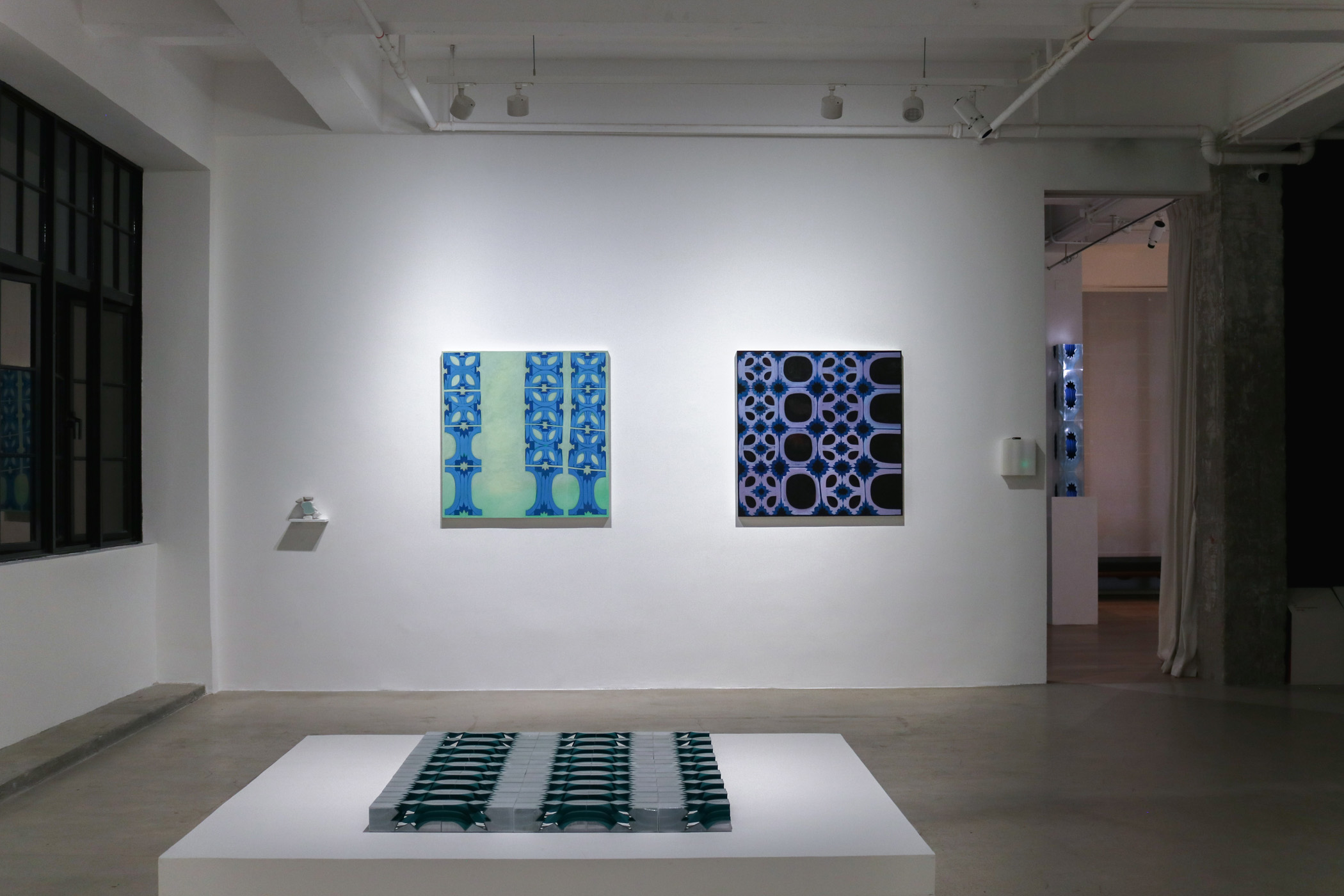
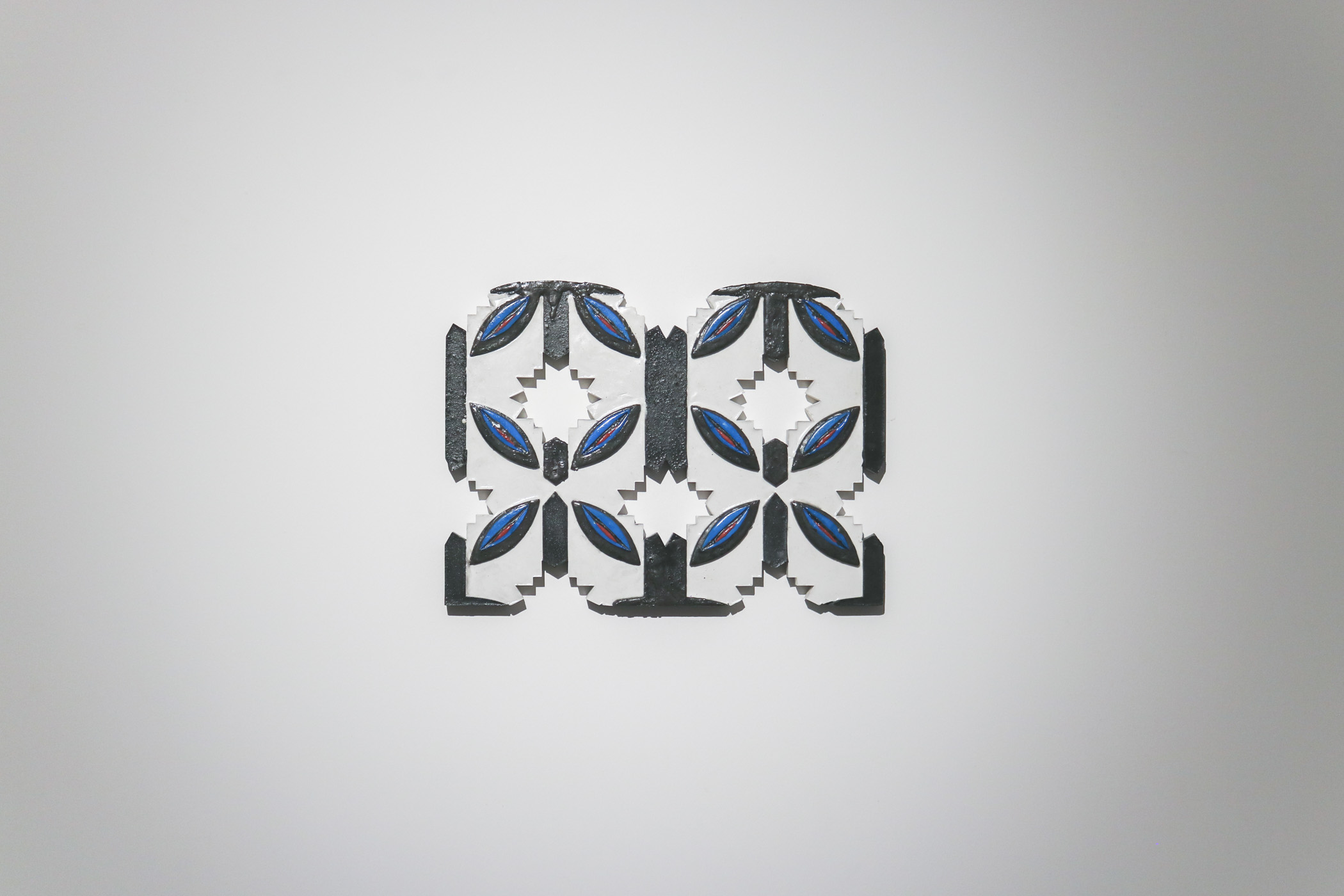
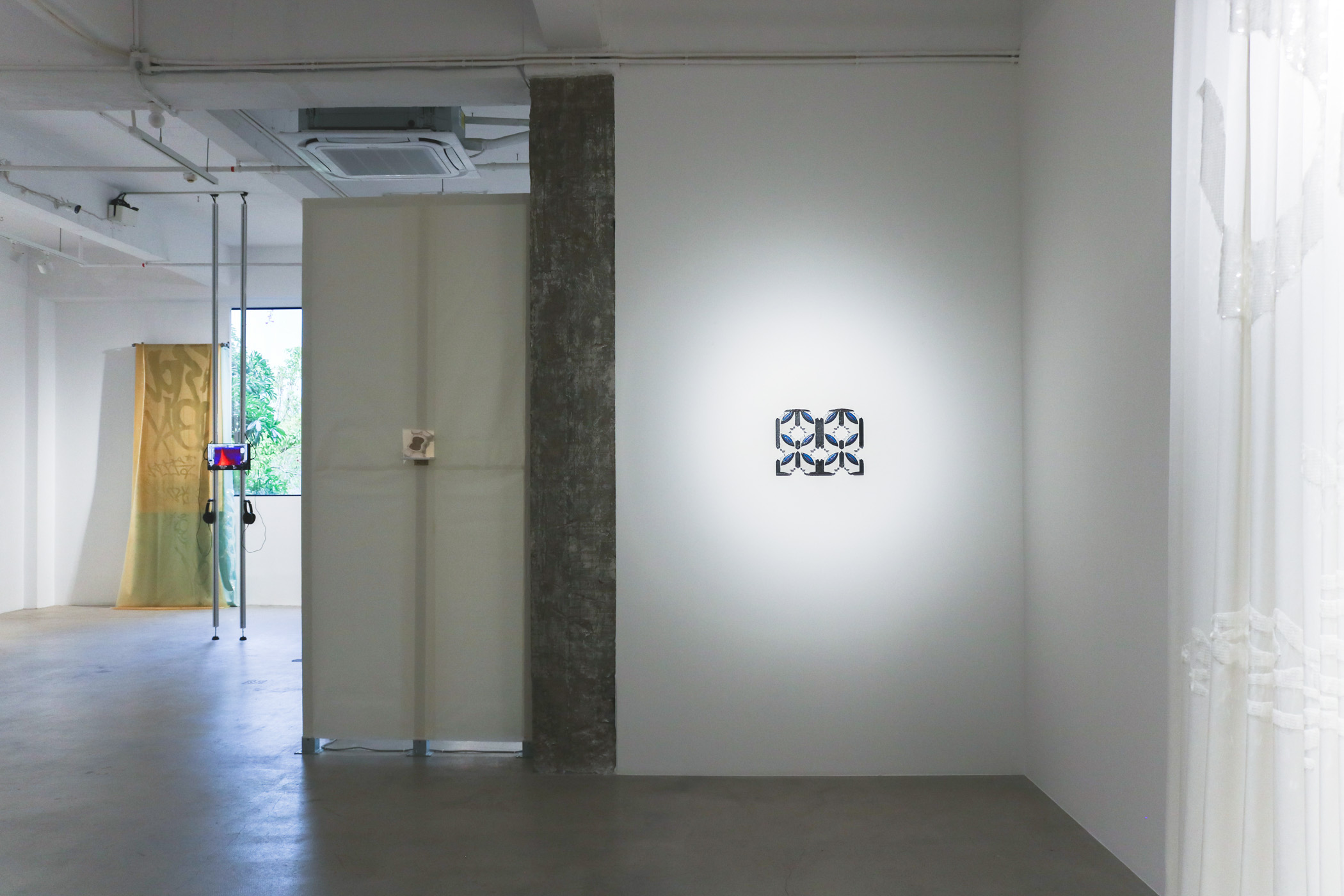
In Didi, the combination of units unfolds into a pattern. Black-and-white contours and blue spindle-shaped details repeat, defining sharp points within the negative space. From a distance, the eye follows the rhythm of colour and repetition; up close, the thickness, edges and shadows of the components reveal the pattern’s physical depth. Decoration is not added to the form: the arrangement determines both the structure and the appearance of the work.
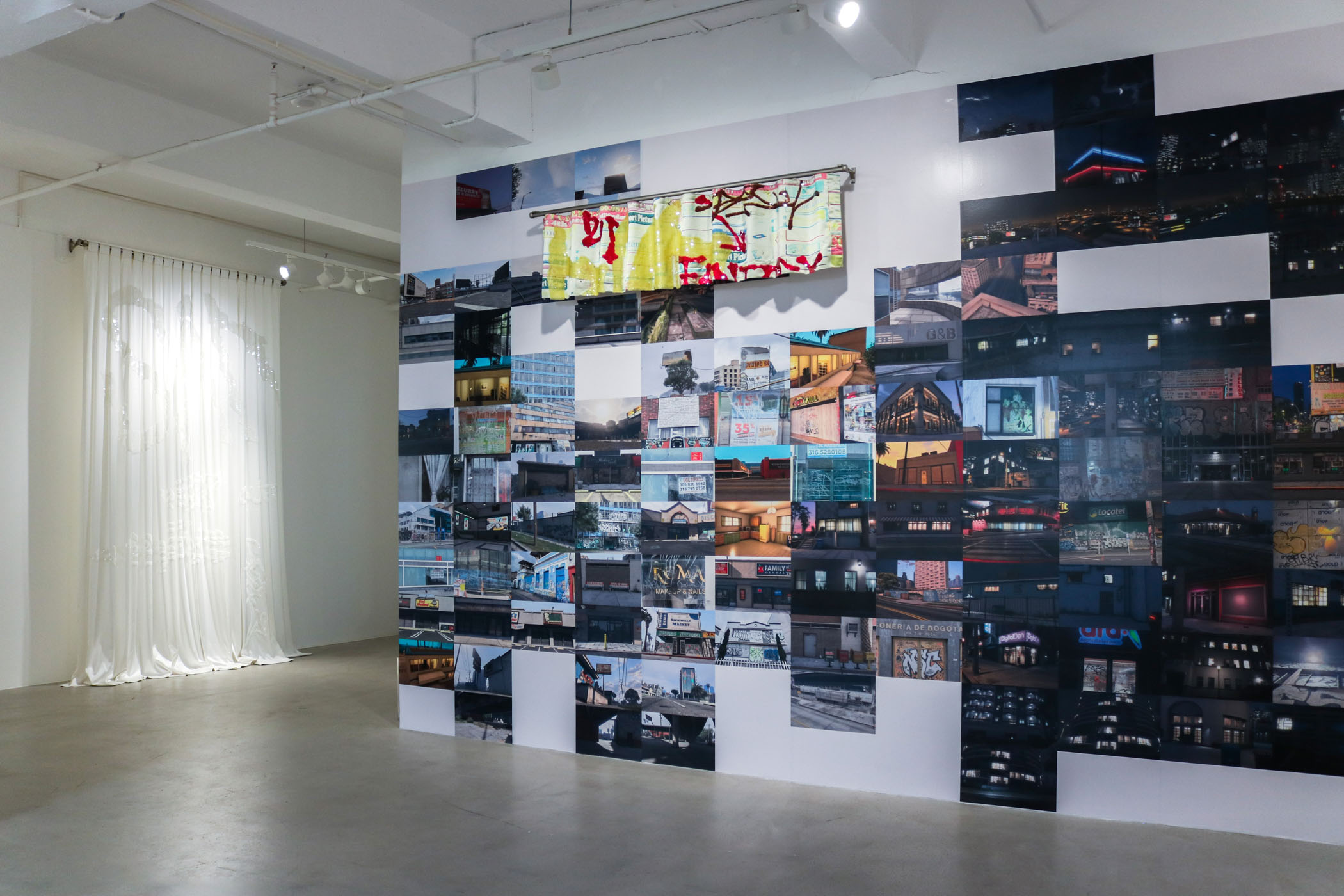
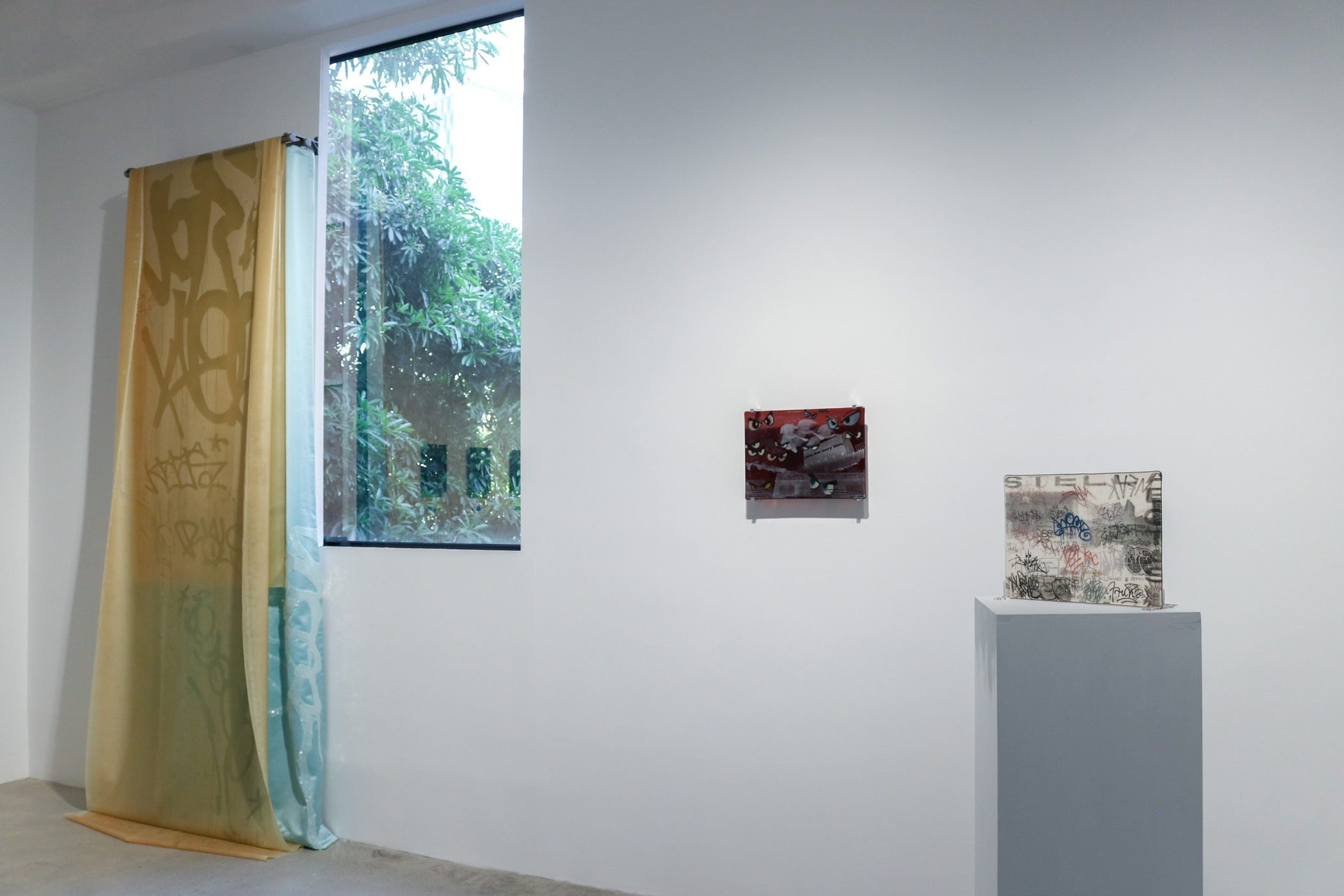
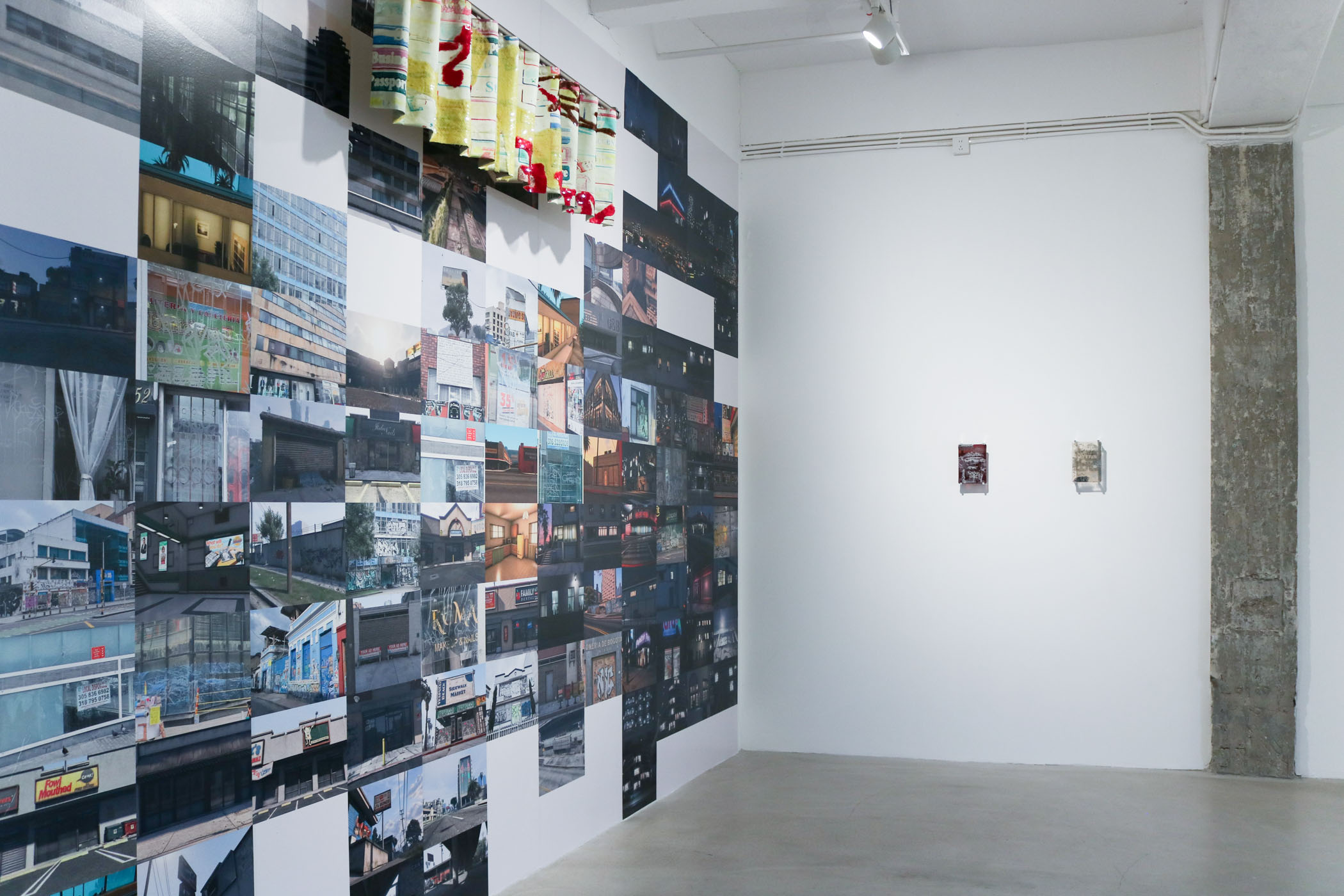
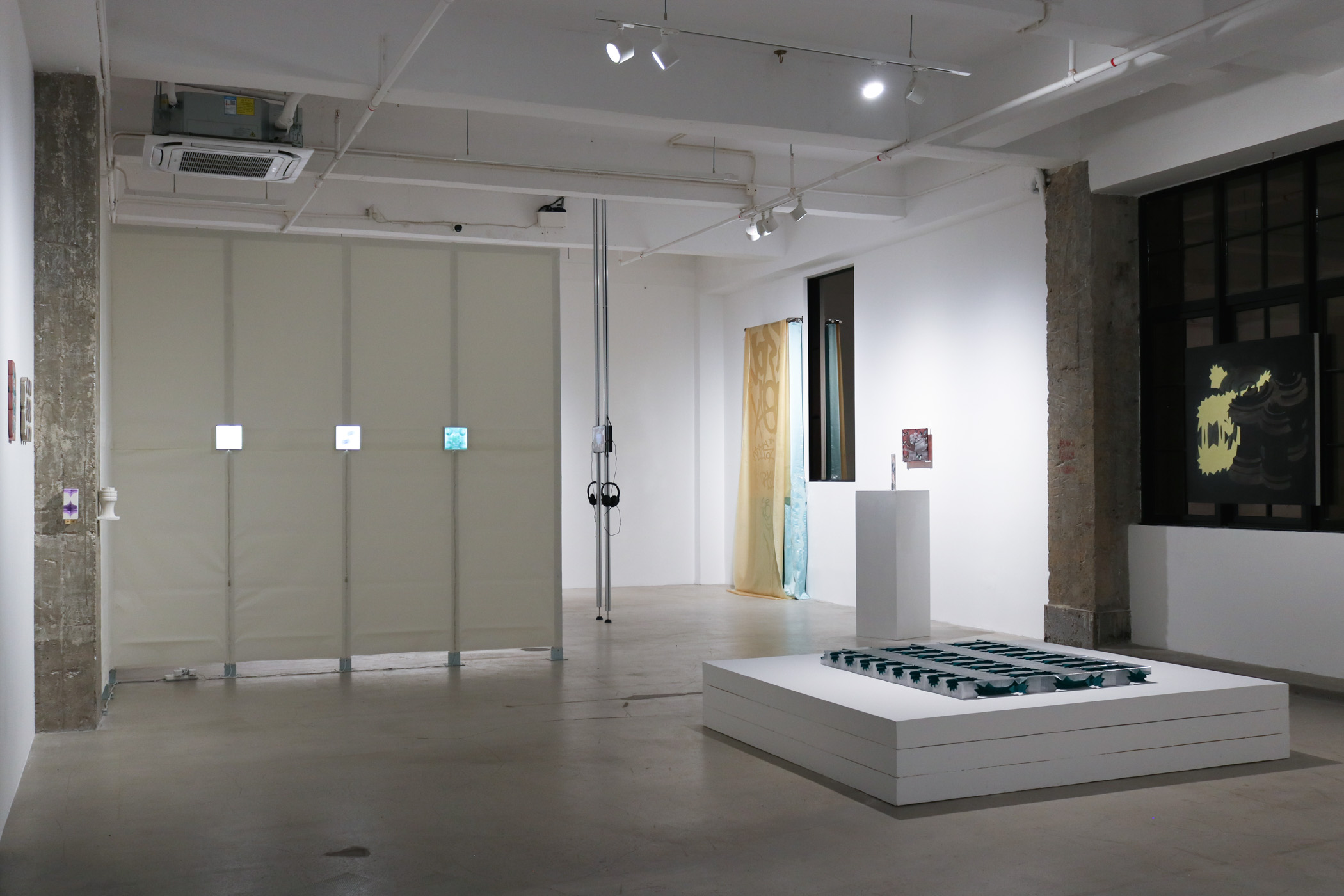
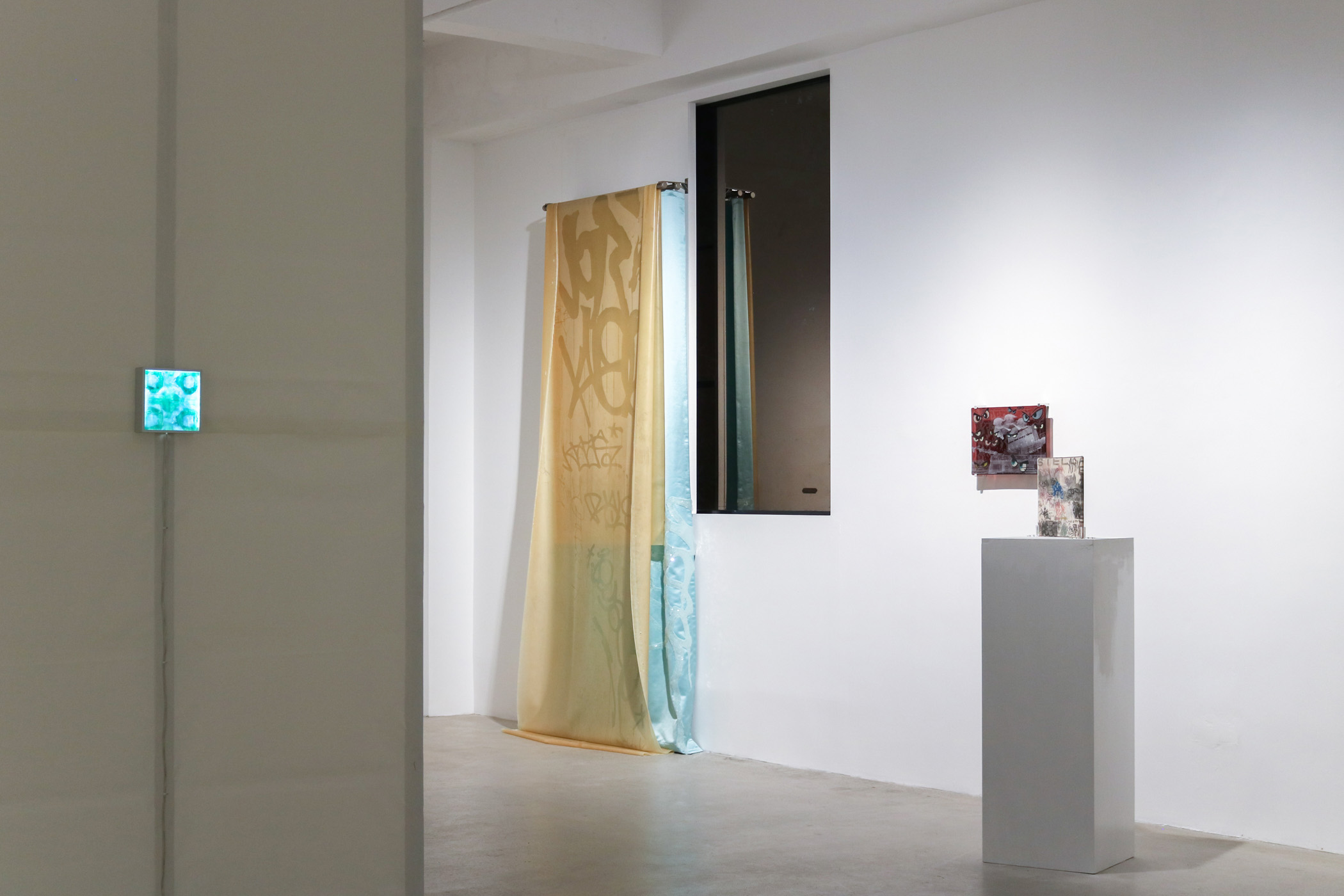
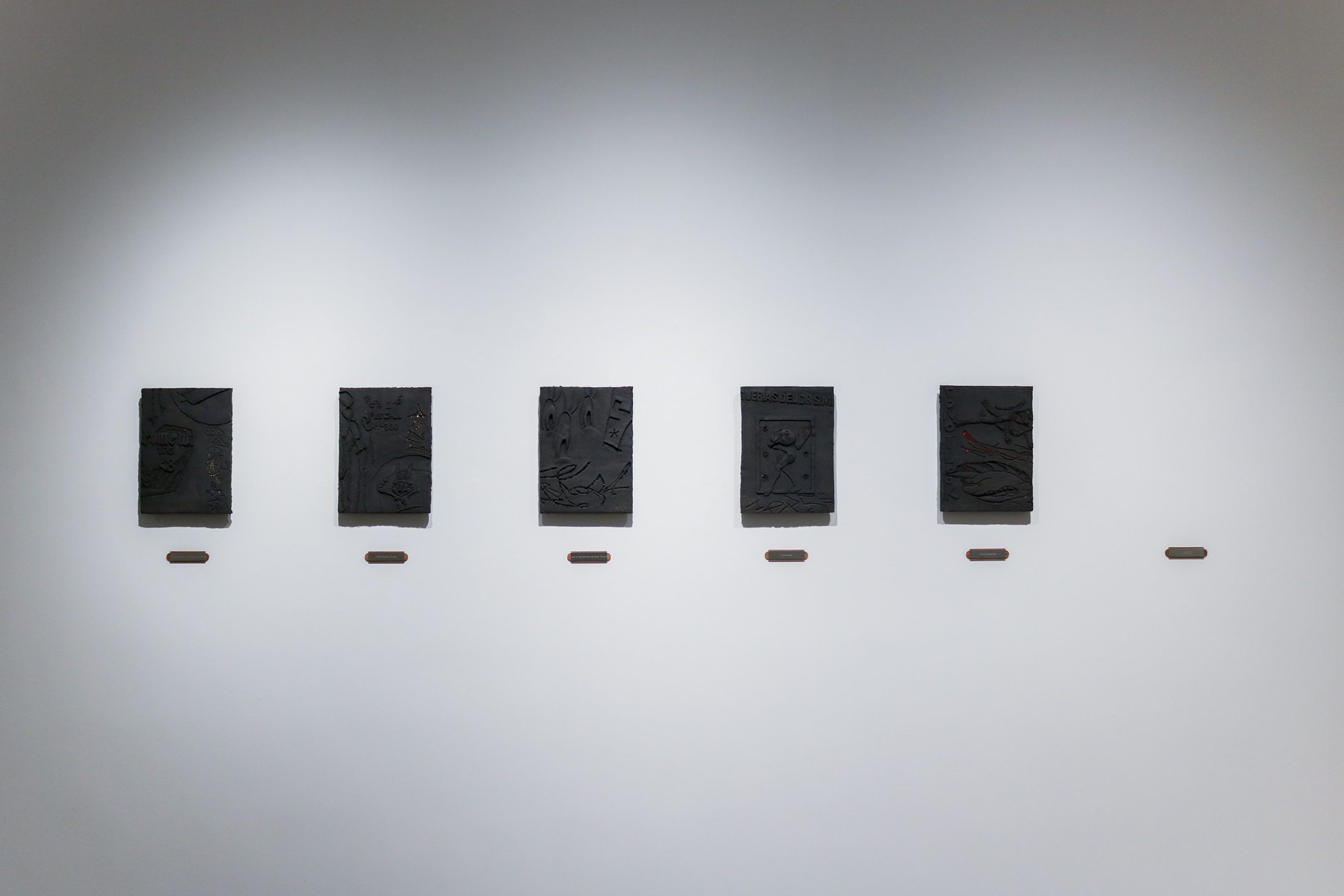
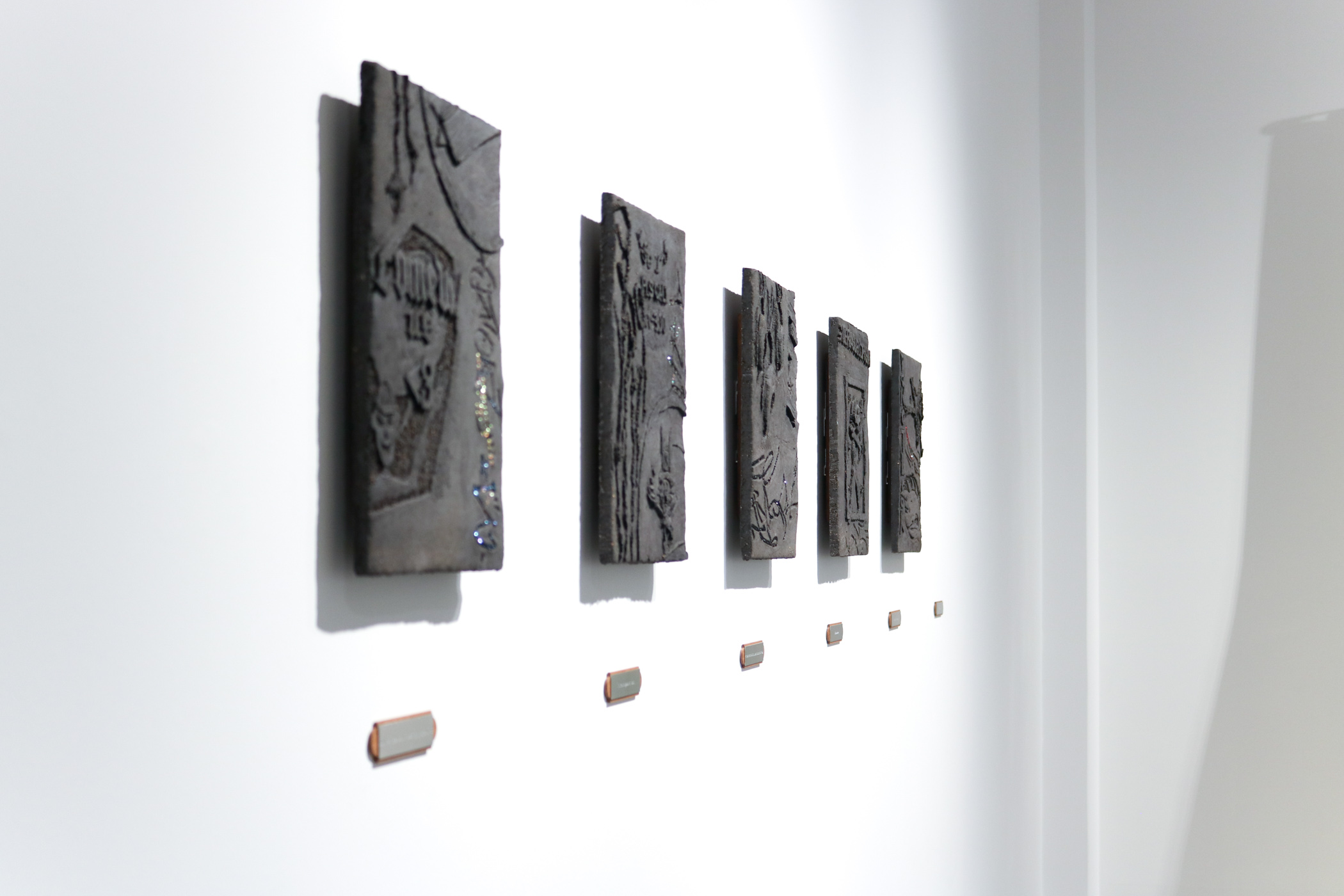
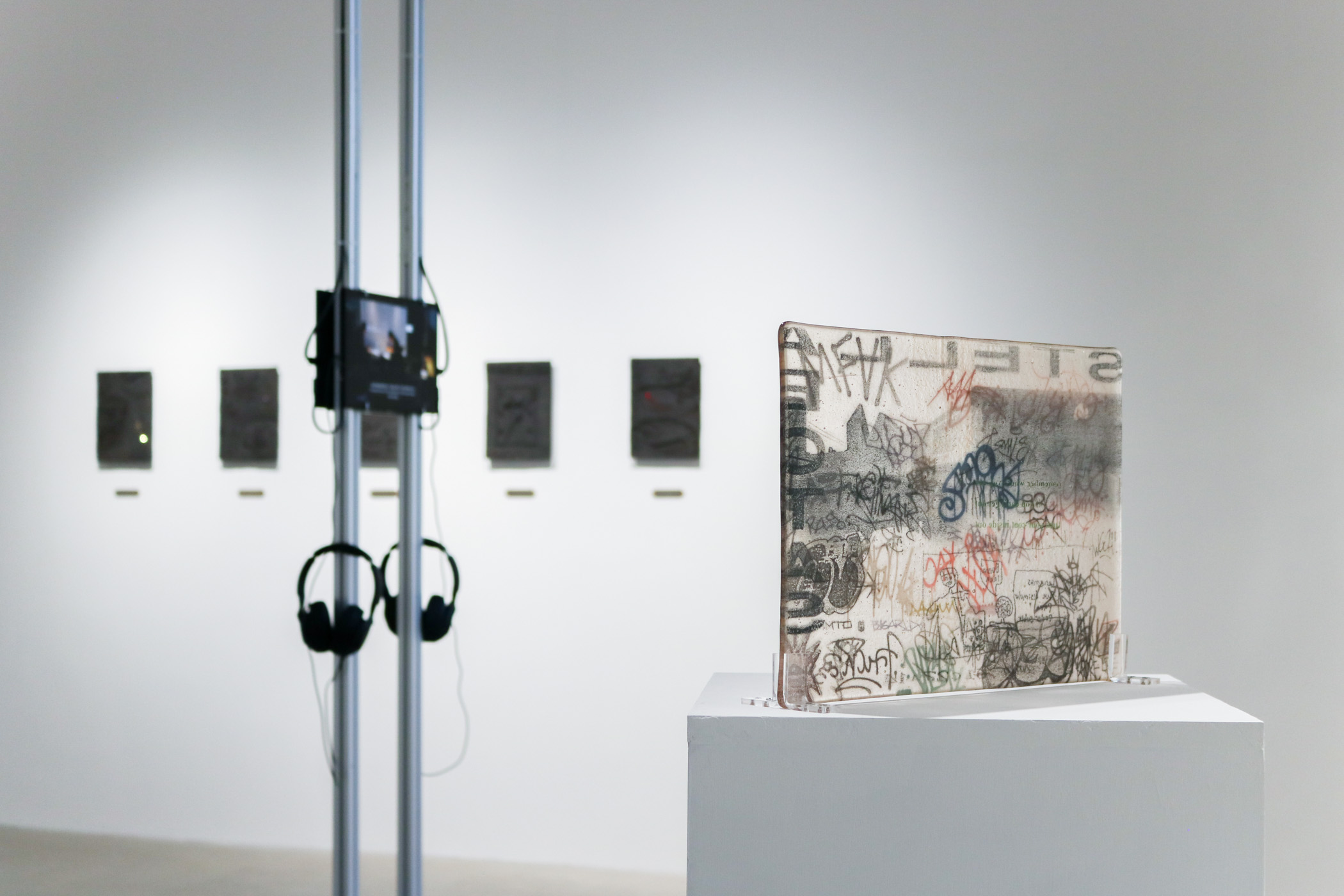
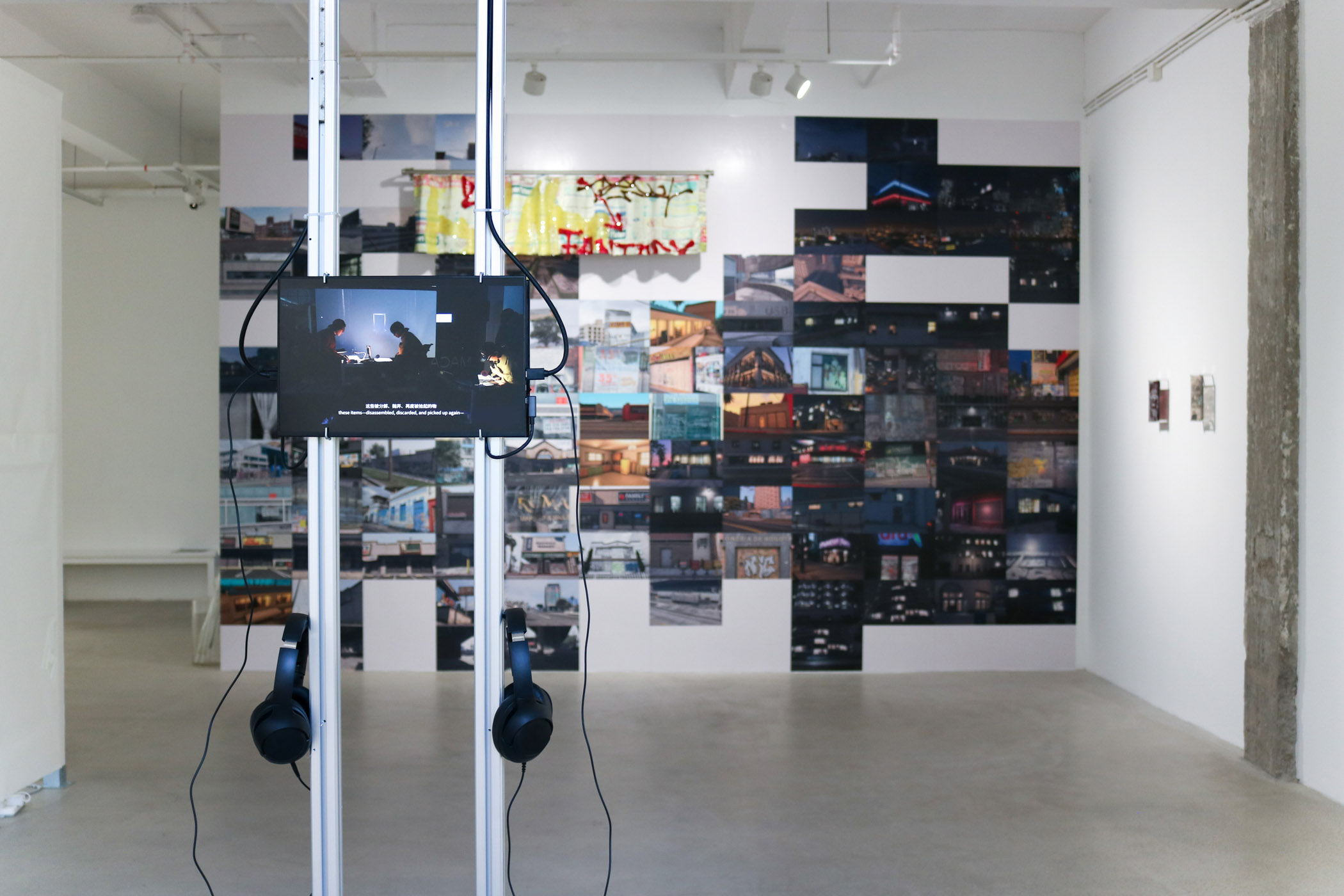
Zheng works instead with images and sounds already in circulation. The performance videos of Dakou weave oral accounts, archival sources and research into a semi-fictional narrative, tracing how cut-out discs changed hands as waste and their music came to be heard again. In his curtain, ceramic and glass works, advertisements, cartoons and street graphics are likewise placed in new settings. He retains their brightness and direct appeal, but obscures text, interrupts decoration where it would normally continue, or places familiar figures in incongruous surroundings.
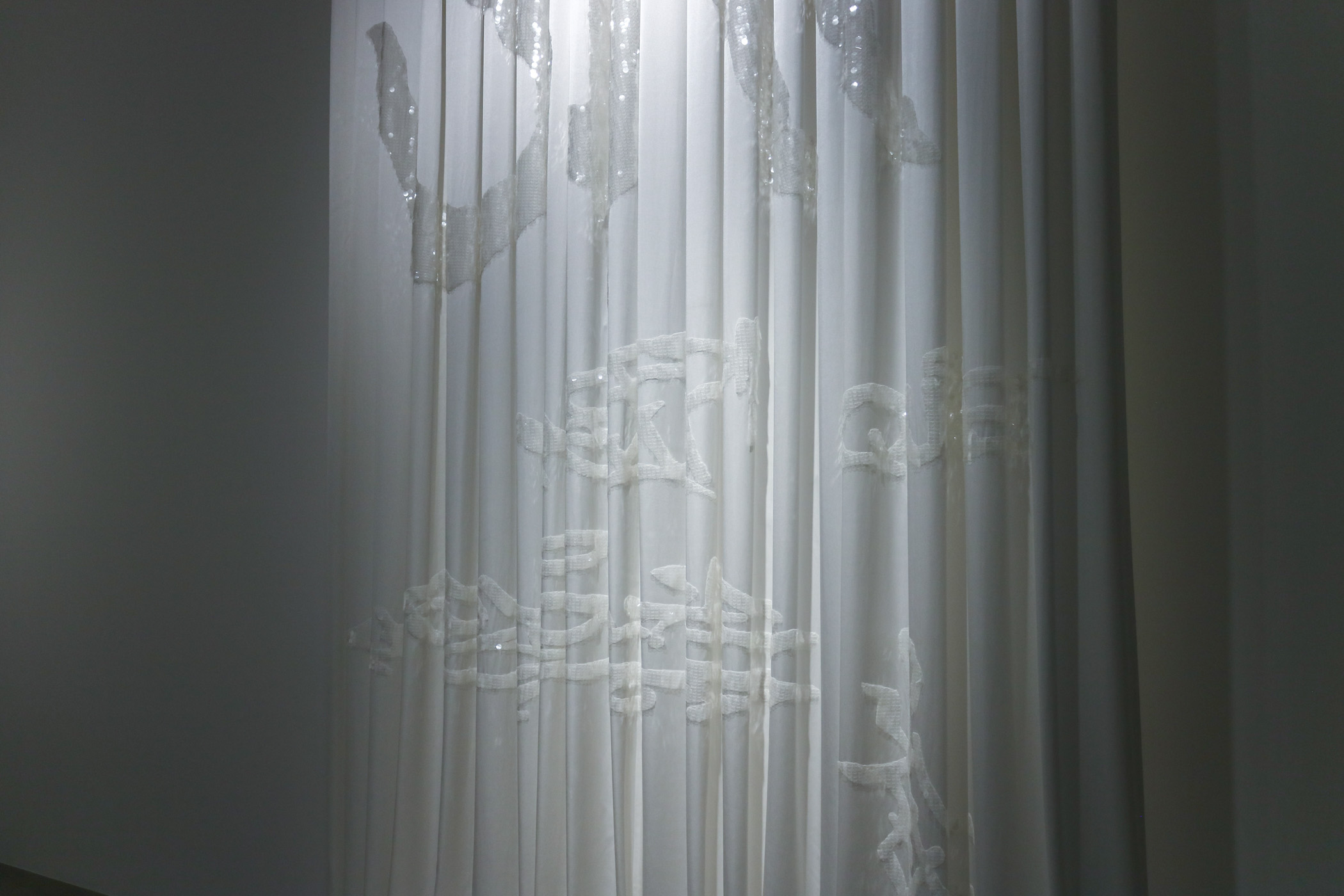
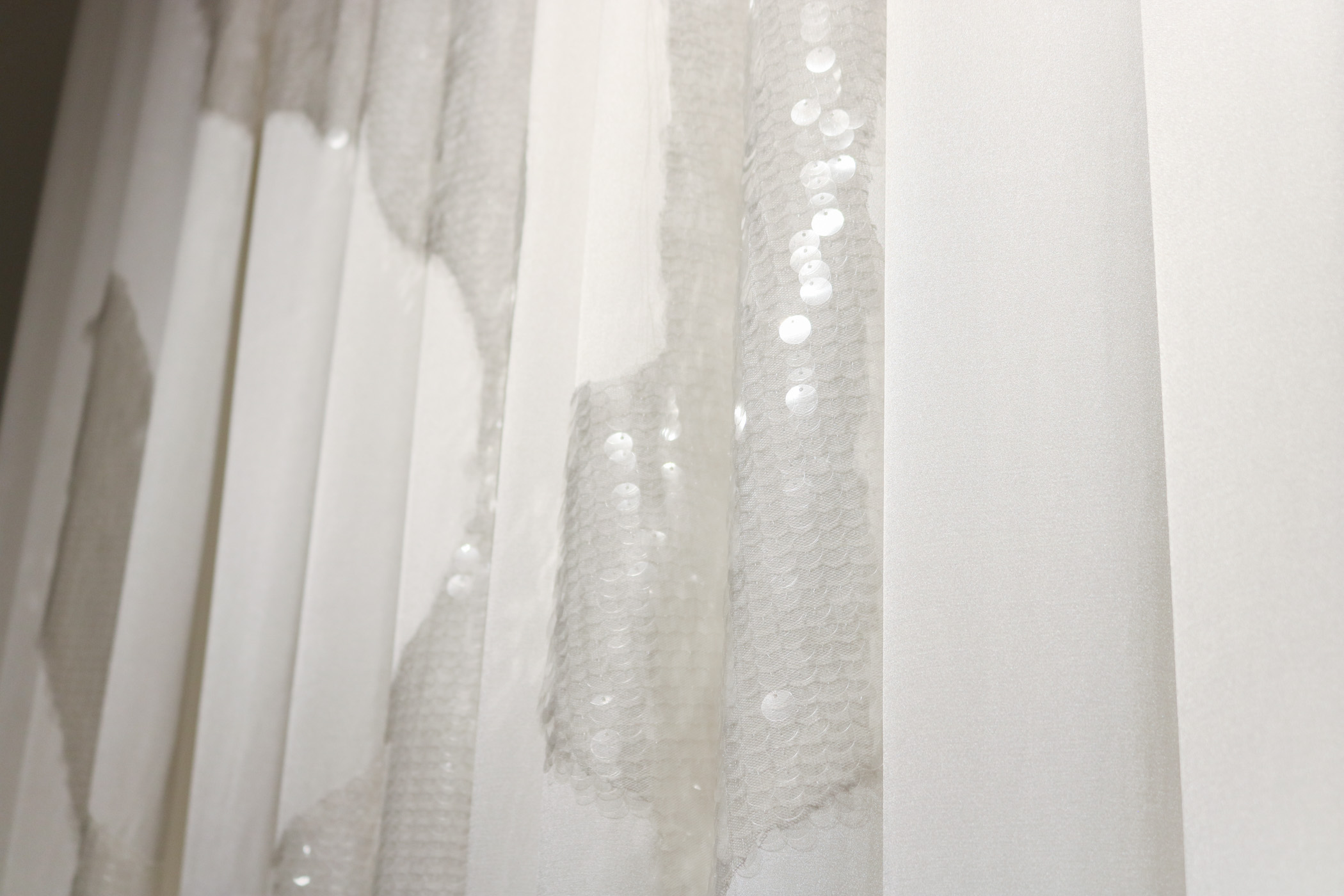
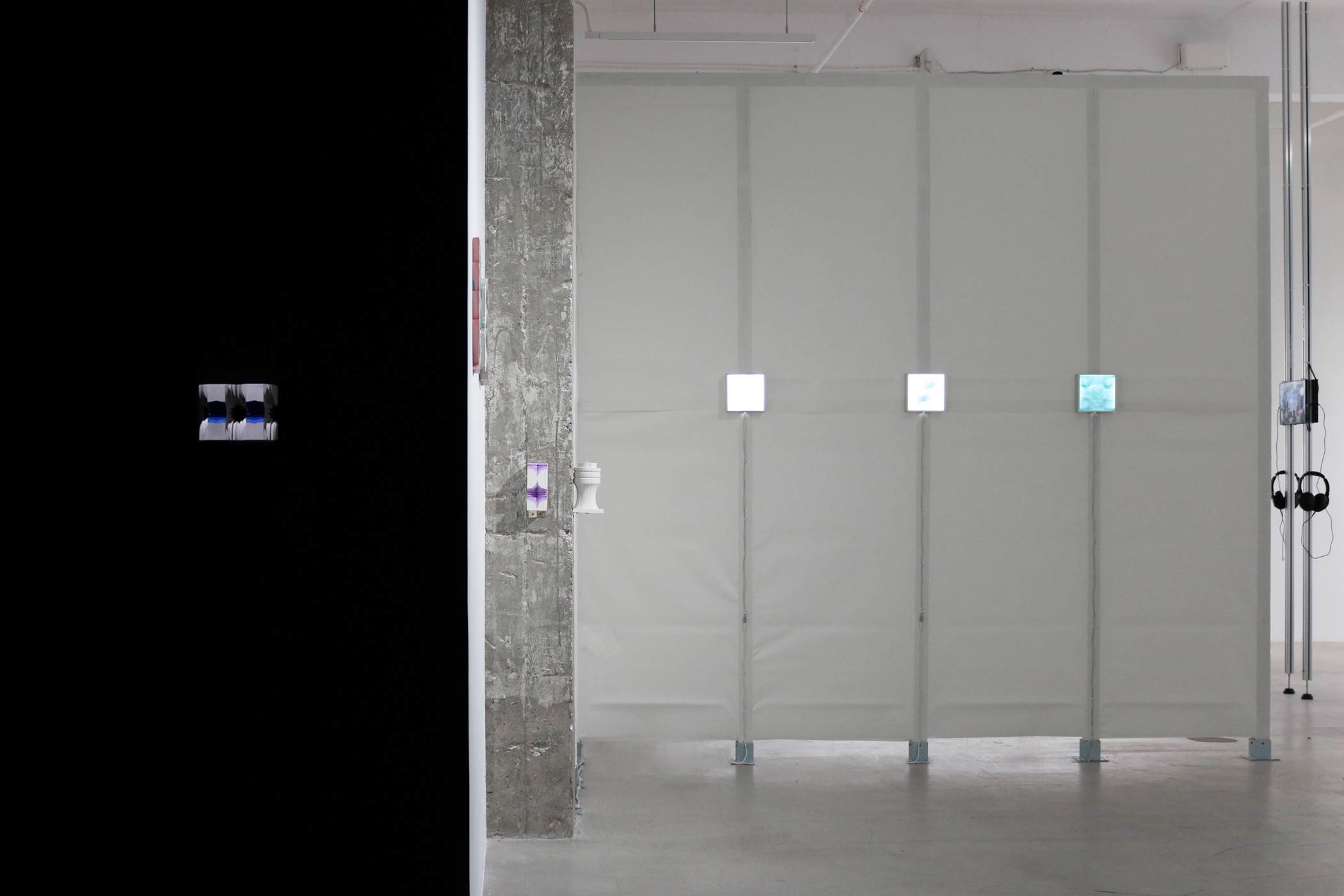
Here, the appeal of an image does not always correspond to how people are allowed to move through a space. The white curtain in 425, Trinity Mall grew out of Zheng’s observations of nightclub partitions: it conceals the activity beyond it, yet invites people to pass through. Its form also reminds him of the metal barriers around construction sites that prevent access. In Shenzhen’s shopping centres and streets, shop windows, doorway curtains and construction barriers similarly influence decisions to approach, pause or take another route. Zheng notices a comparable discrepancy in video-game architecture: windows are lit, rooms contain furniture and curtains, yet there is no way in. On the streets of Bogotá, he has seen shop windows covered in graffiti while life inside carries on as usual. The white curtain in the exhibition brings invitation and obstruction together at the same boundary; its appearance alone does not tell us what we are allowed to do.
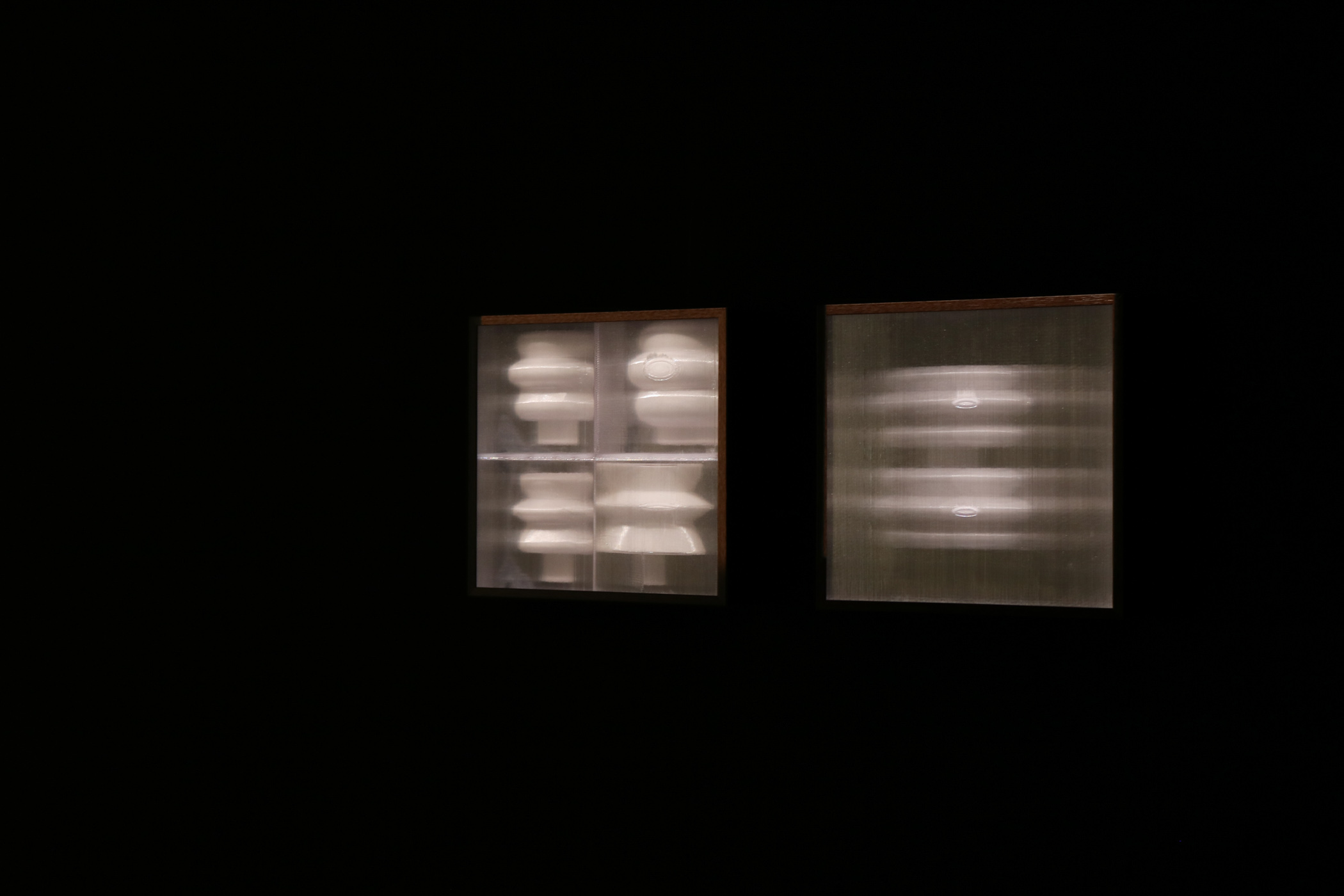
The glass works draw on the separation of image and background in cel animation. Cartoon eyes and advertising lettering overlap with the walls, light and shadows behind the glass. The images remain recognisable, but their backgrounds change with the viewer’s position. The visible details of everyday life do not necessarily correspond to places we can physically reach.
Decodeco. Say it once more, and it begins to sound like the name of a shop one might come across around a street corner in Shenzhen. Each in their own way, Ou Xiaotong and Zheng Ke give this imagined building the freedom to grow.
