
FEAST, LUST, WASTE
March brings the damp return of the southern spring, growth, and the awakening of all things; the city ushers in its most generous time of the year. People flock to exhibitions, to each other, and to everything that deserves to be seen.‘Mǐ mǐ’ pronounced with a viscous and soft cadence, feels like holding something sweet in the mouth, something overly sweet. Its first meaning is a feast, indulgence, and a satiety steeped in the senses. Yet, ‘mǐ’ points to exhaustion, dissipation and demise. These two layers of meaning are never clash, much like how anything truly moving carries its own weight.
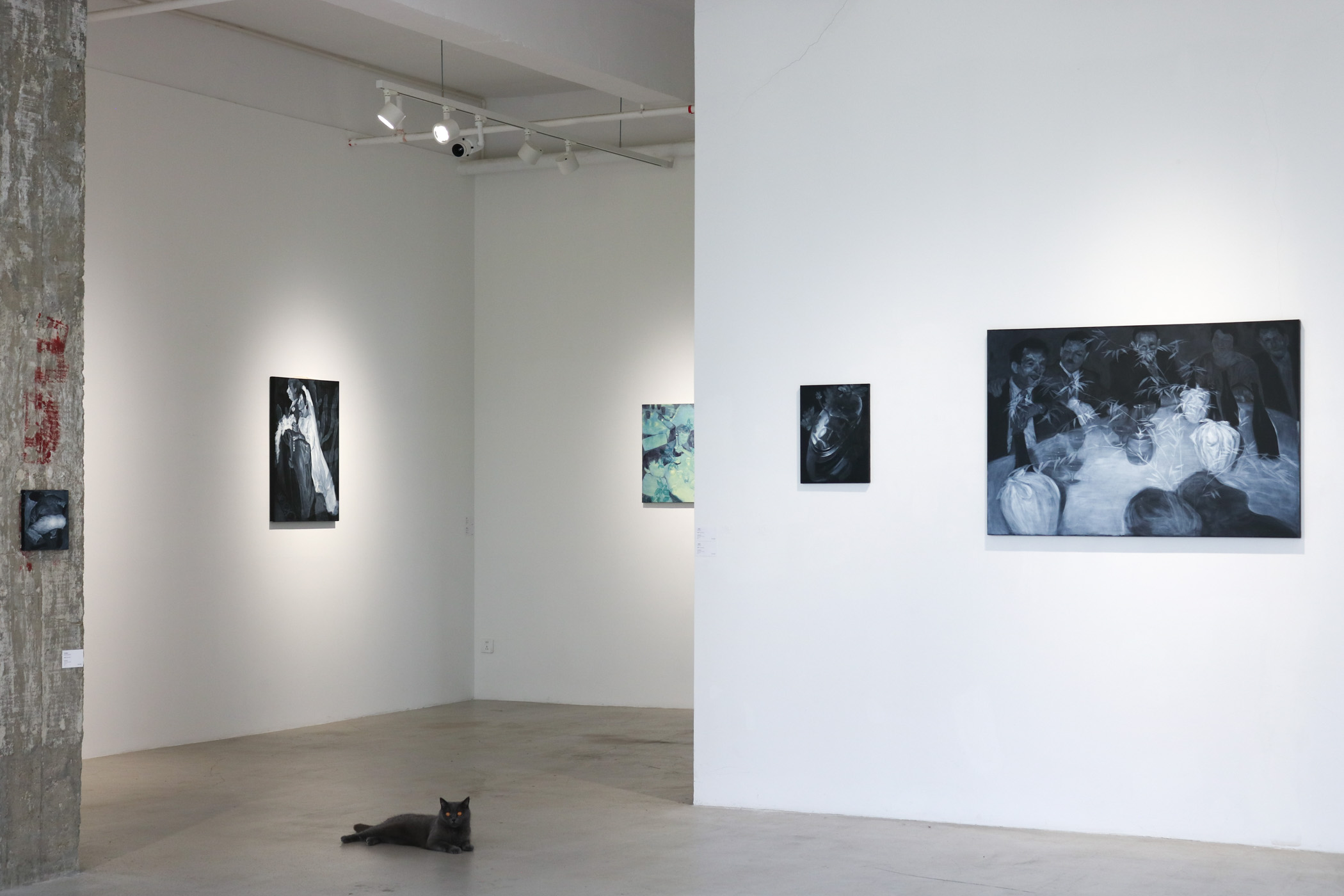
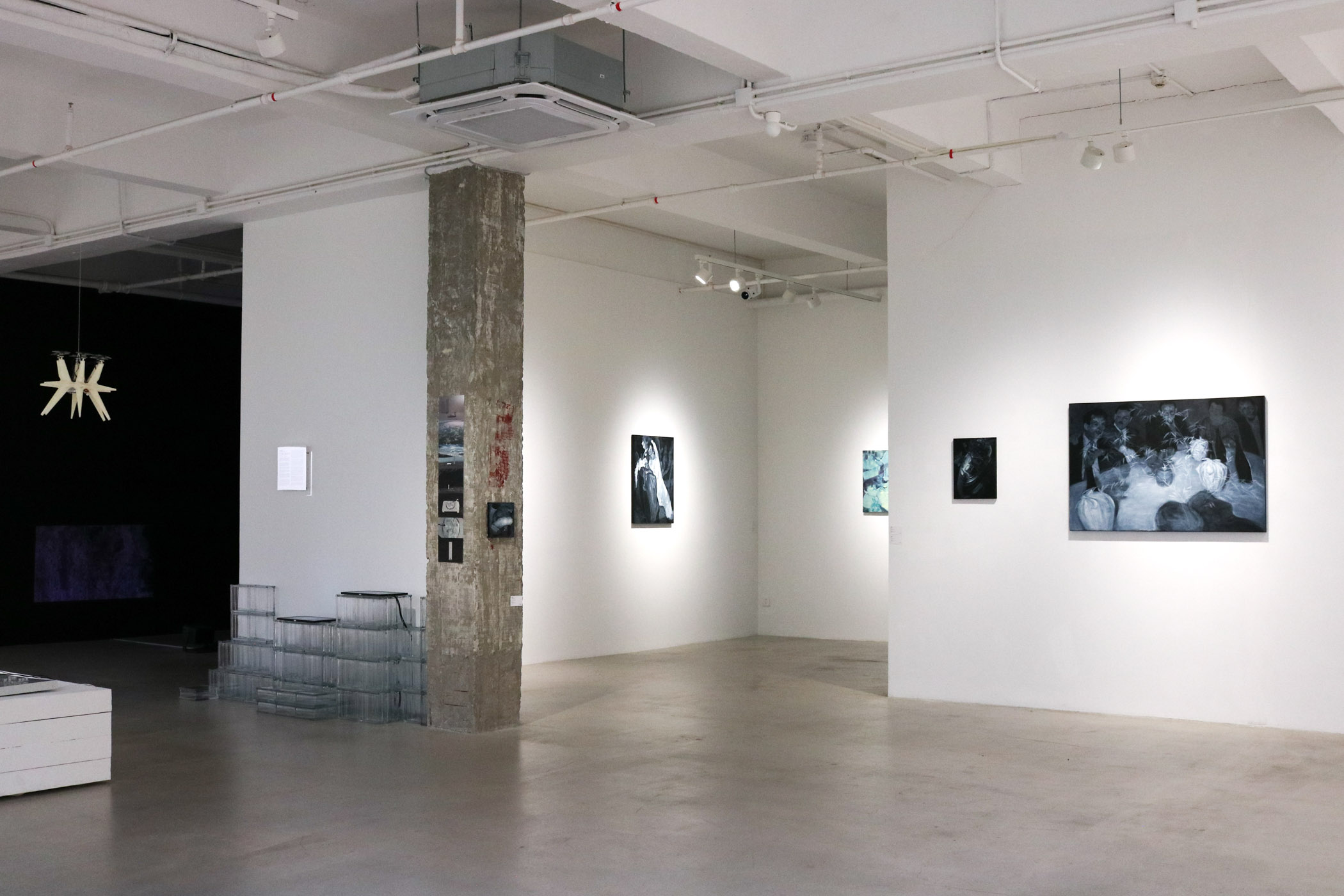
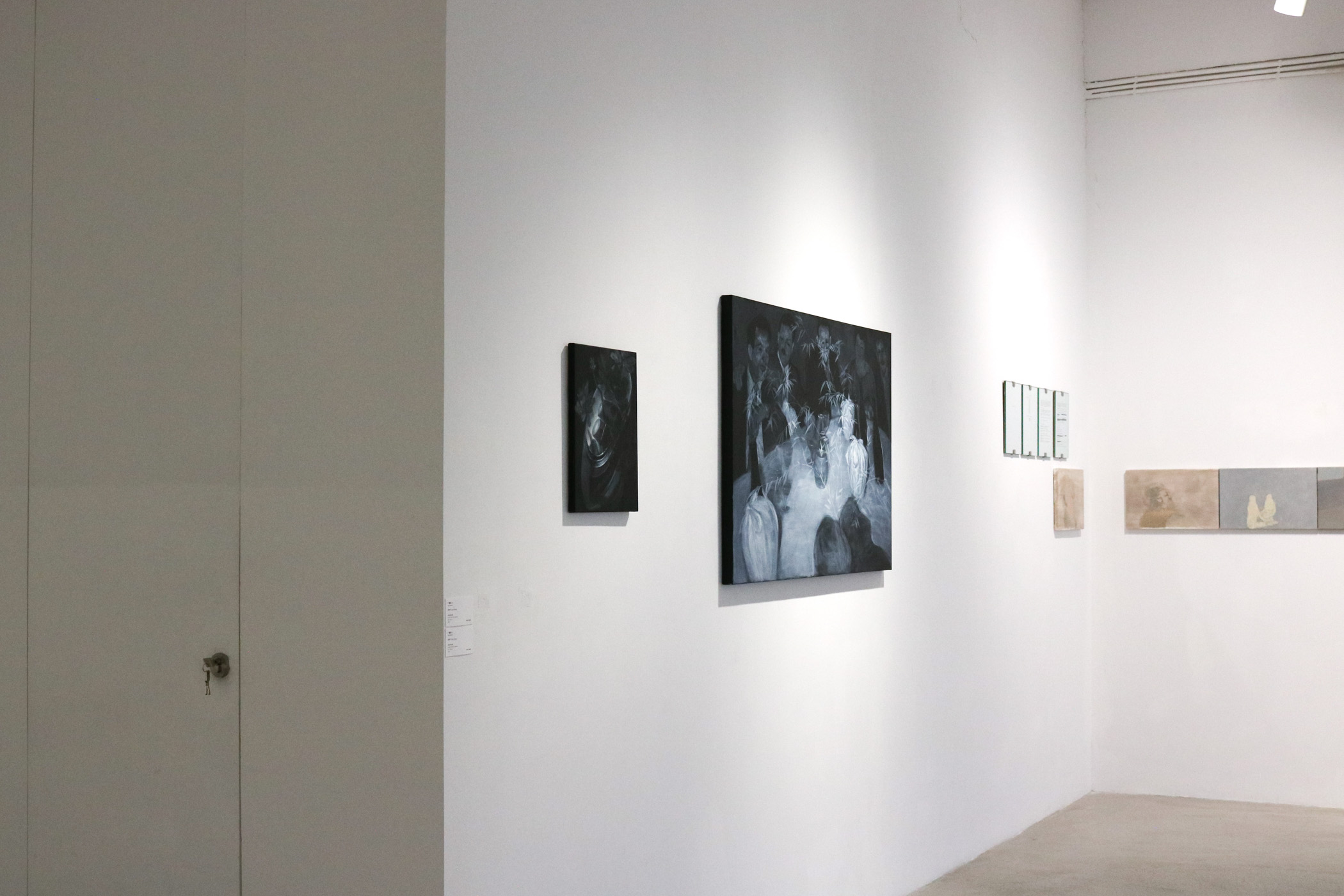
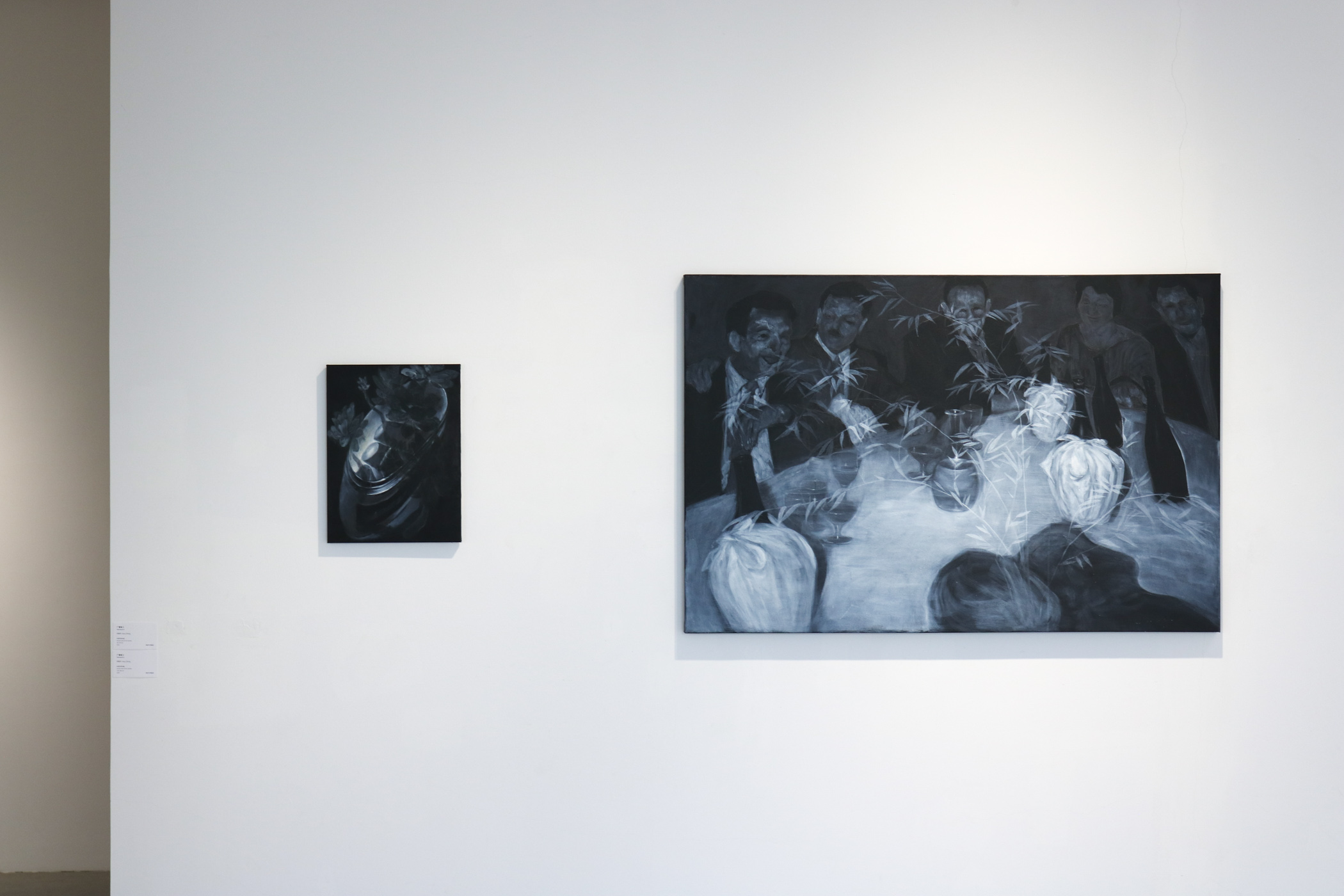
Jieyu Zheng believes that fate is preordained. The moment a spoonful of alphabet soup is scooped up, it appears random, but is in fact predestined. The plants superimposed on her imagery—patchouli, bamboo leaves, moss—are encrypted private marks on her, left for us to project their own meaning onto. For her, choice is never a purely free decision, but rather a restricted space of possibilities.
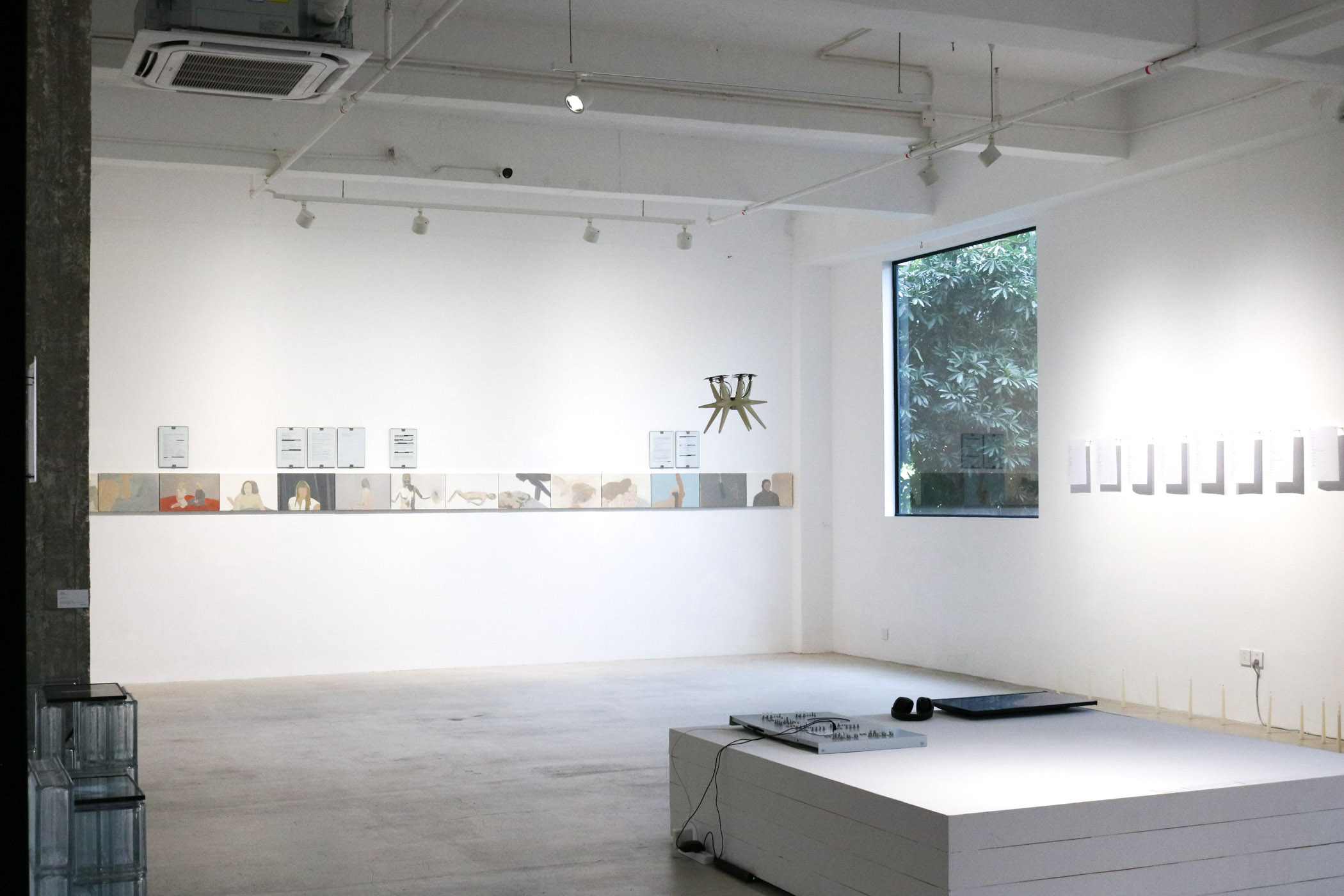
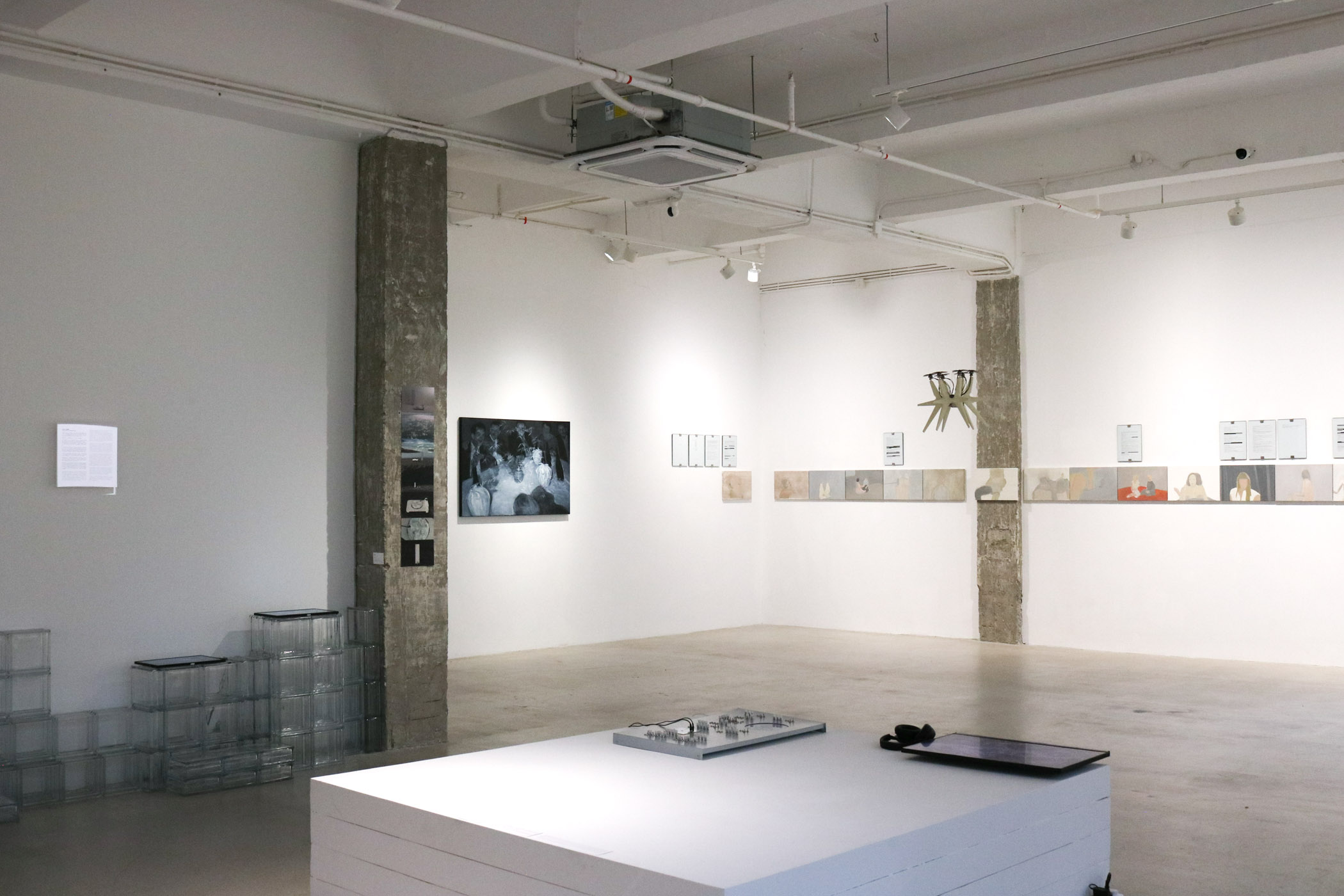
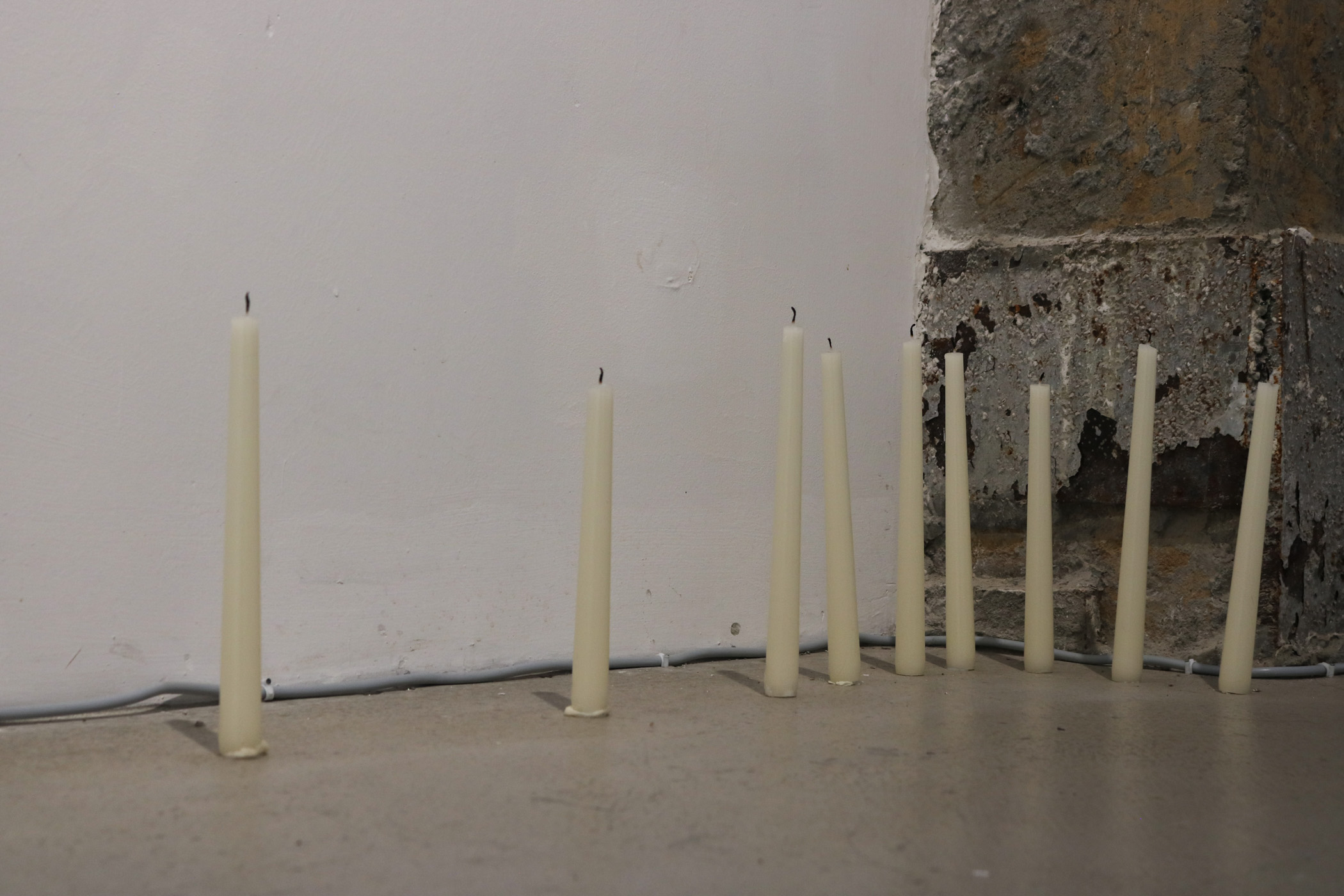
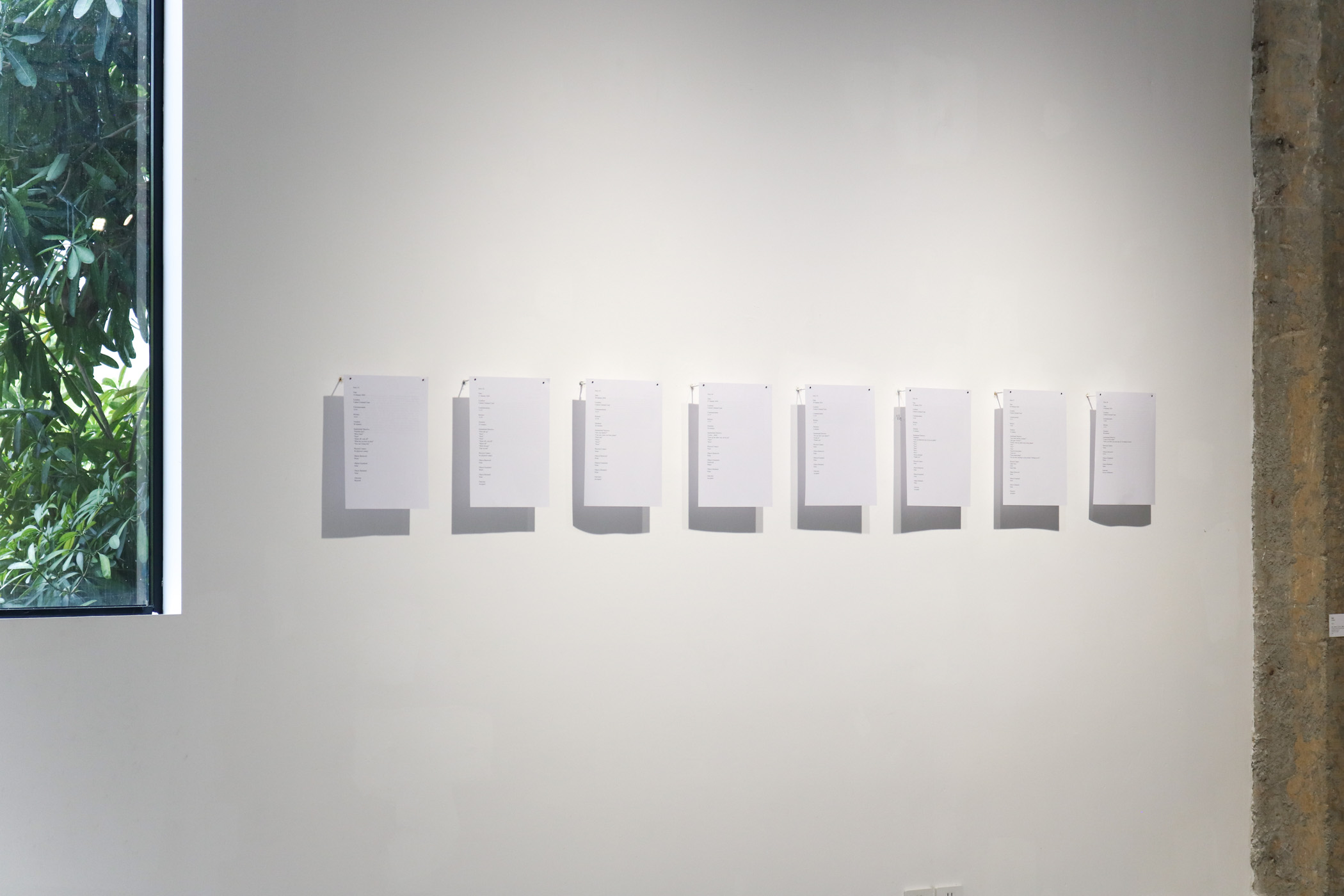
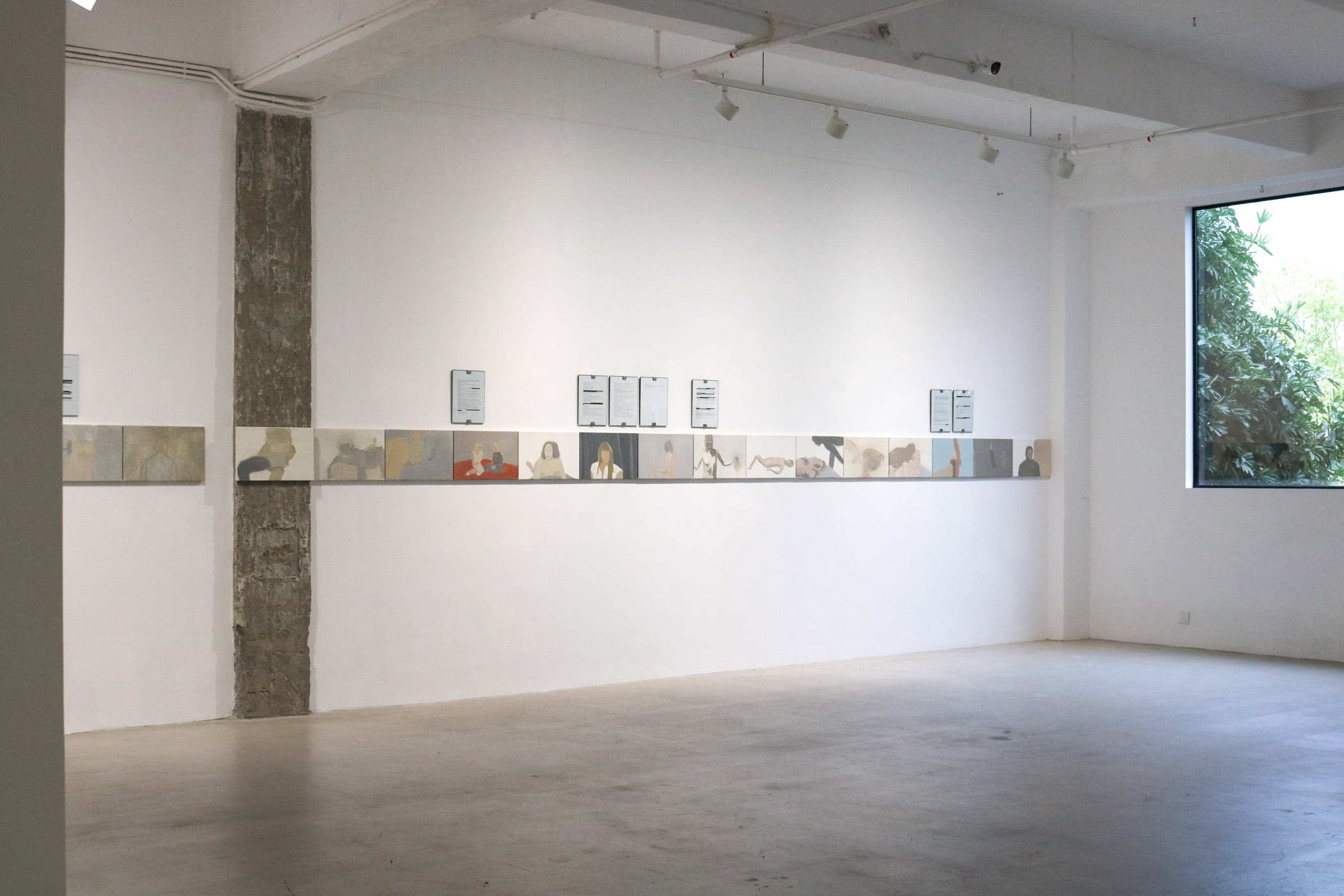
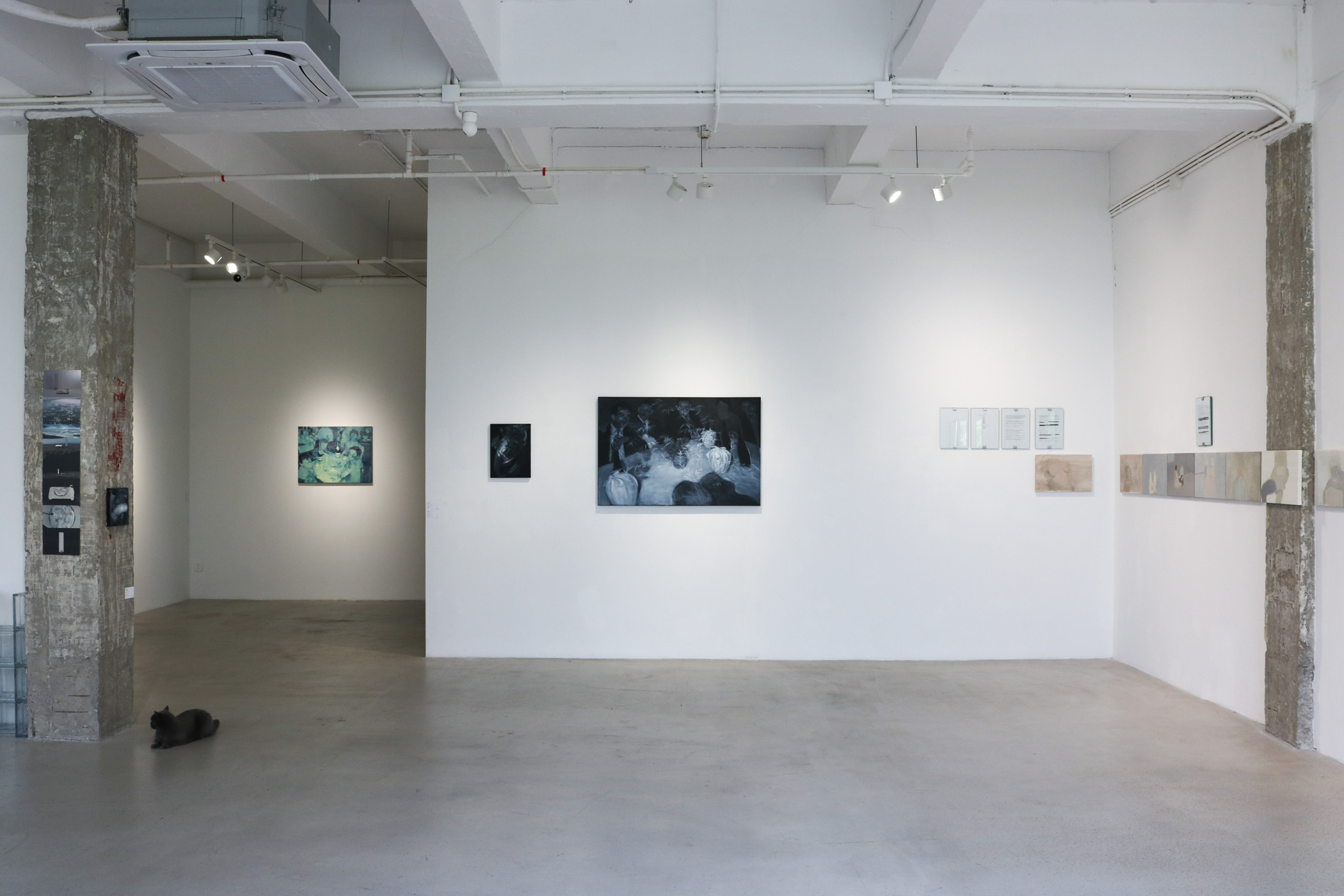
Yan Li is fascinated by security checks, a place where strict orders and sensory pleasure coexist. She repeatedly visits the Central Criminal Court in London, not to attend hearings , but to experience its entrance: removing her belongings, completing the procedures, and walking through the scanner. The rules are set: you can rebel against them, yet you cannot truly resist. She reaches a shift, discovering a bizarre kind of pleasure within these very constrains. Untitled, 2026 documents her 15 visits—the first eight feature text. When language becomes redundant, she ceases to write—the later visits became to candles.
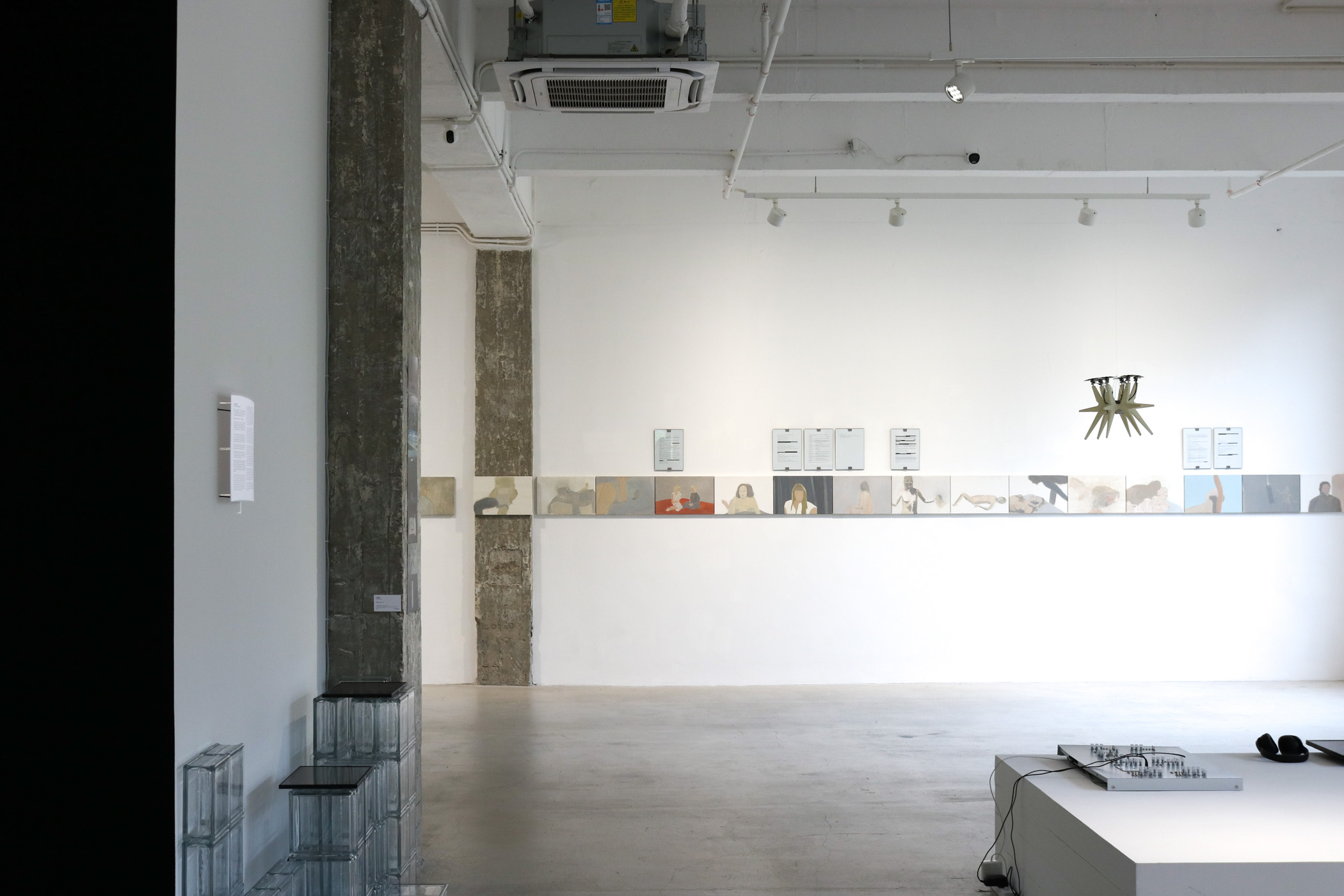
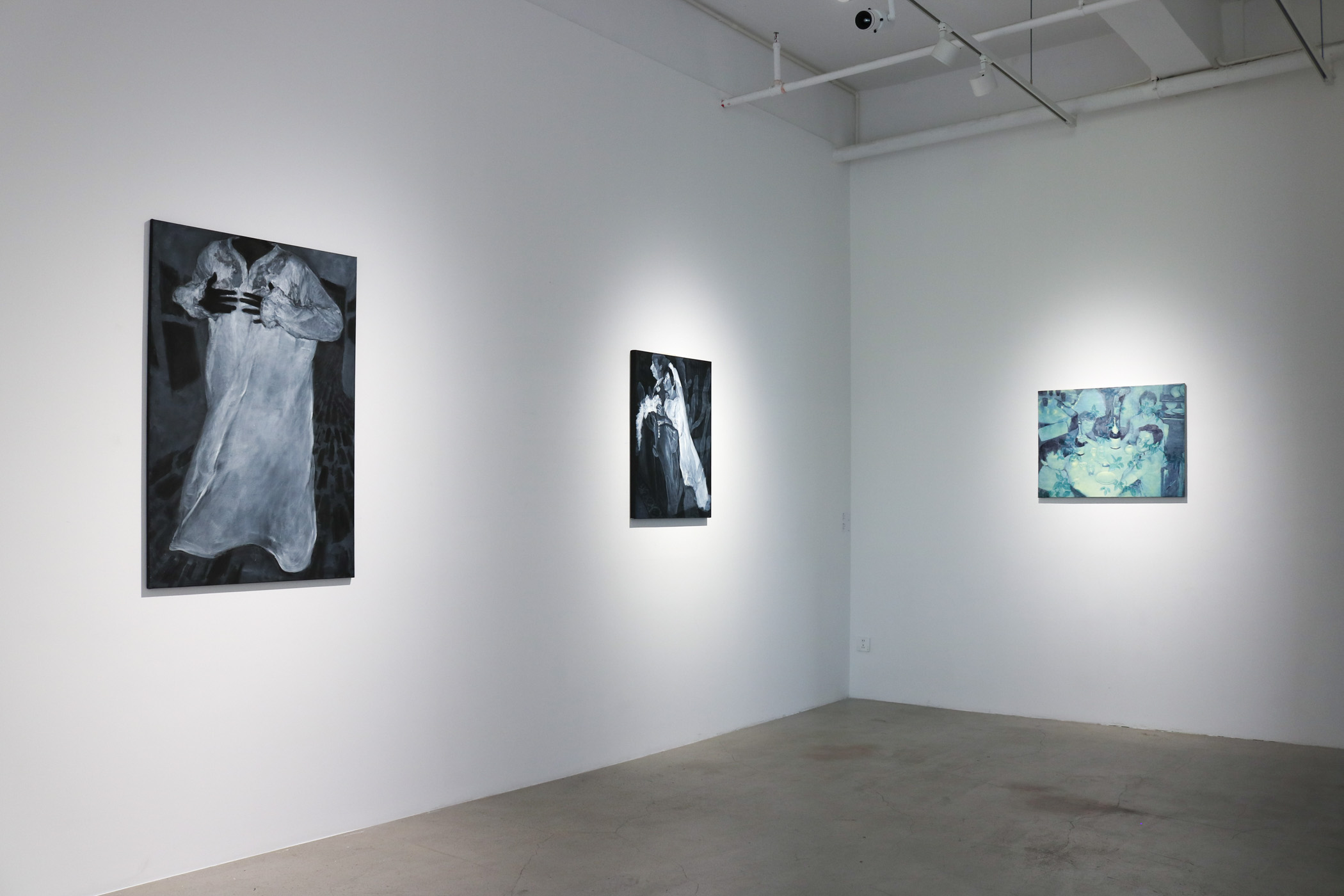
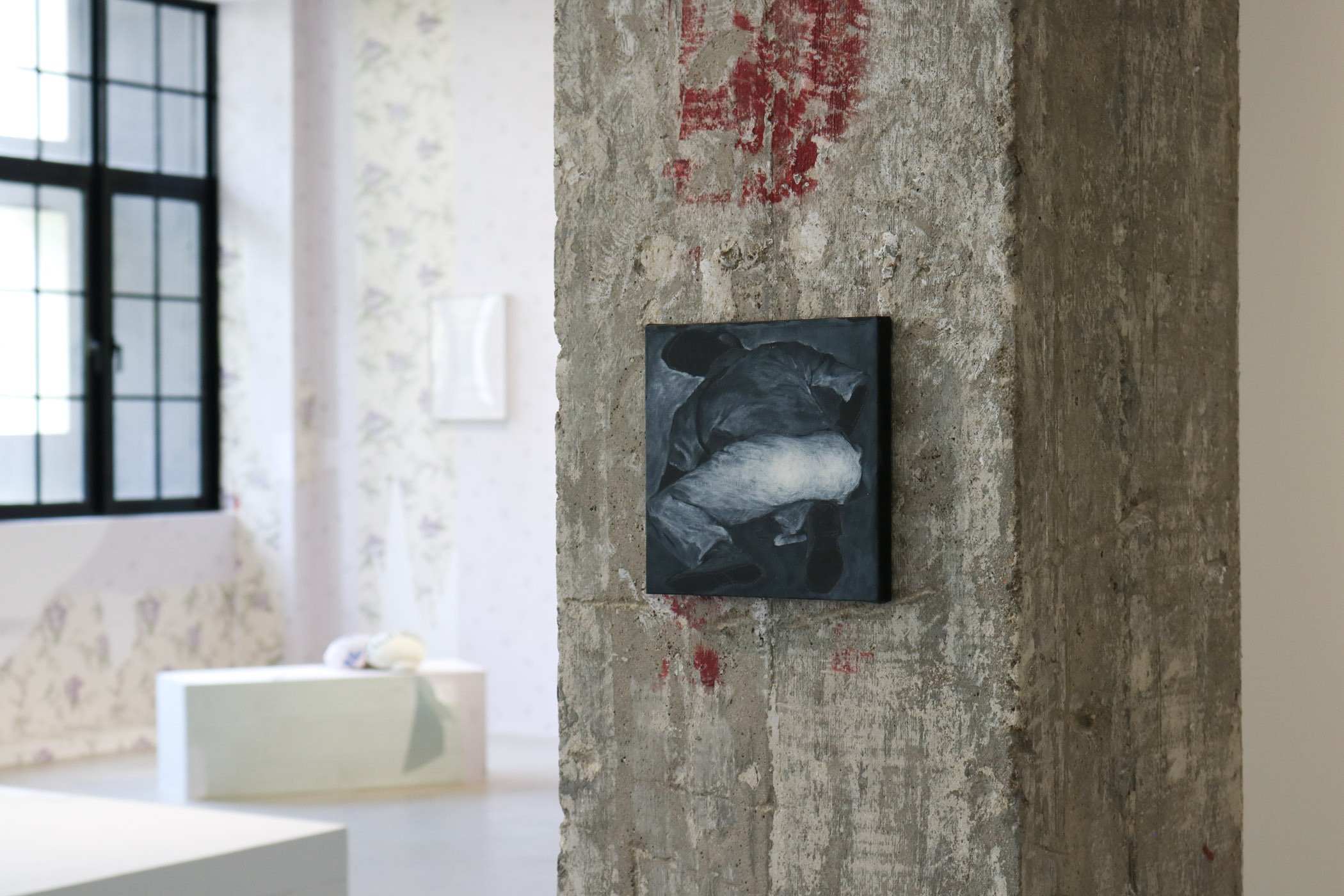
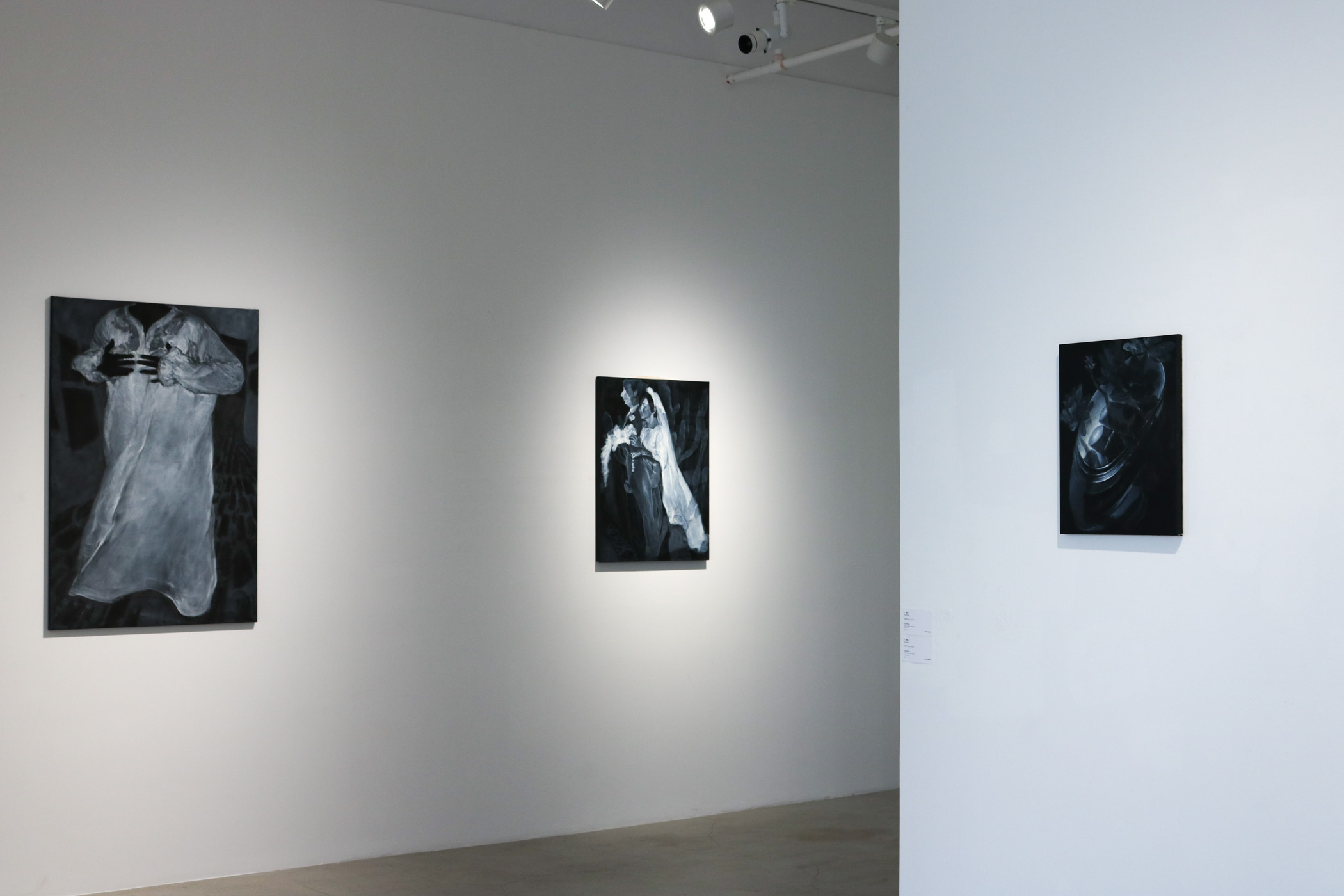
Yan and Yuxuan Shao orchestrated a form of collusion. Yan transcribed video footage into a stage script format, blacked out certain lines, and printed the script on thermal paper. The trails on this paper sits on the surface and slowly fades over time; it manifests in a highly artificial manner, yet vanishes through the natural progression of time. Yuxuan Shao took this ‘uncompleted’ text and fabricated content for the blackouts, generated twenty-one pieces of Playscript. Fading human figures and faint silhouettes, the paint is eroded with oil paint thinners, freezing the images at the very edge of vanishing.
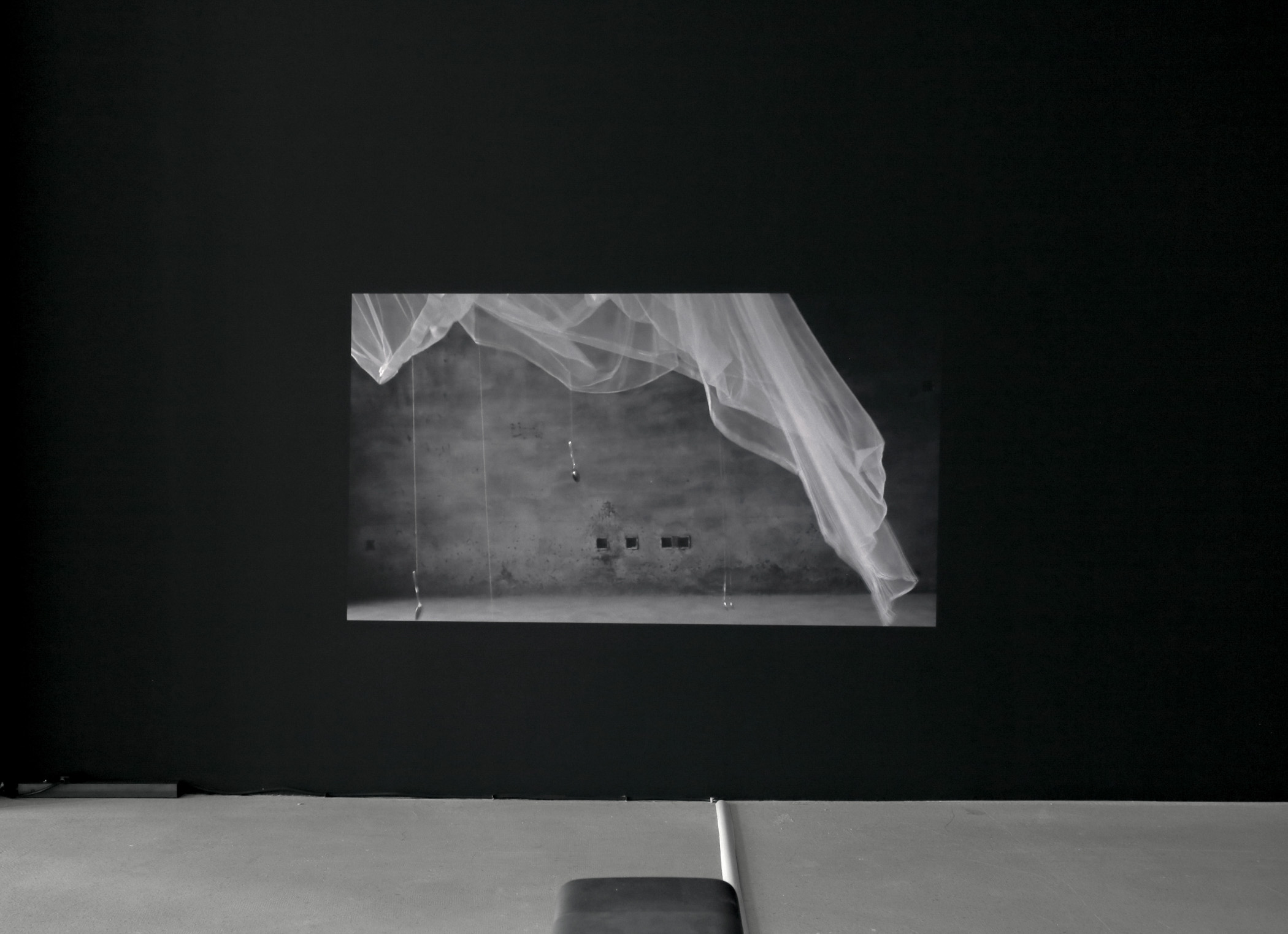
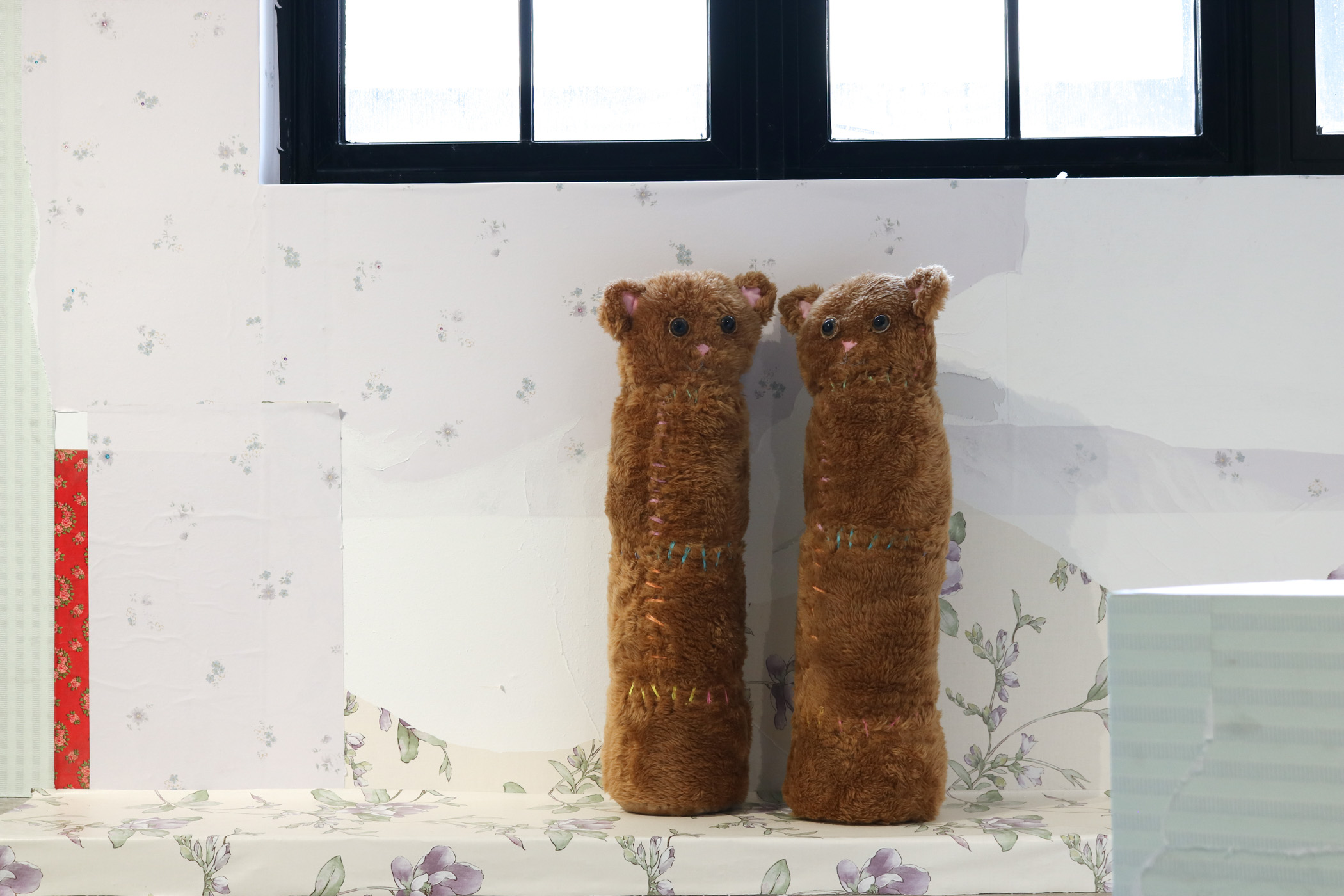
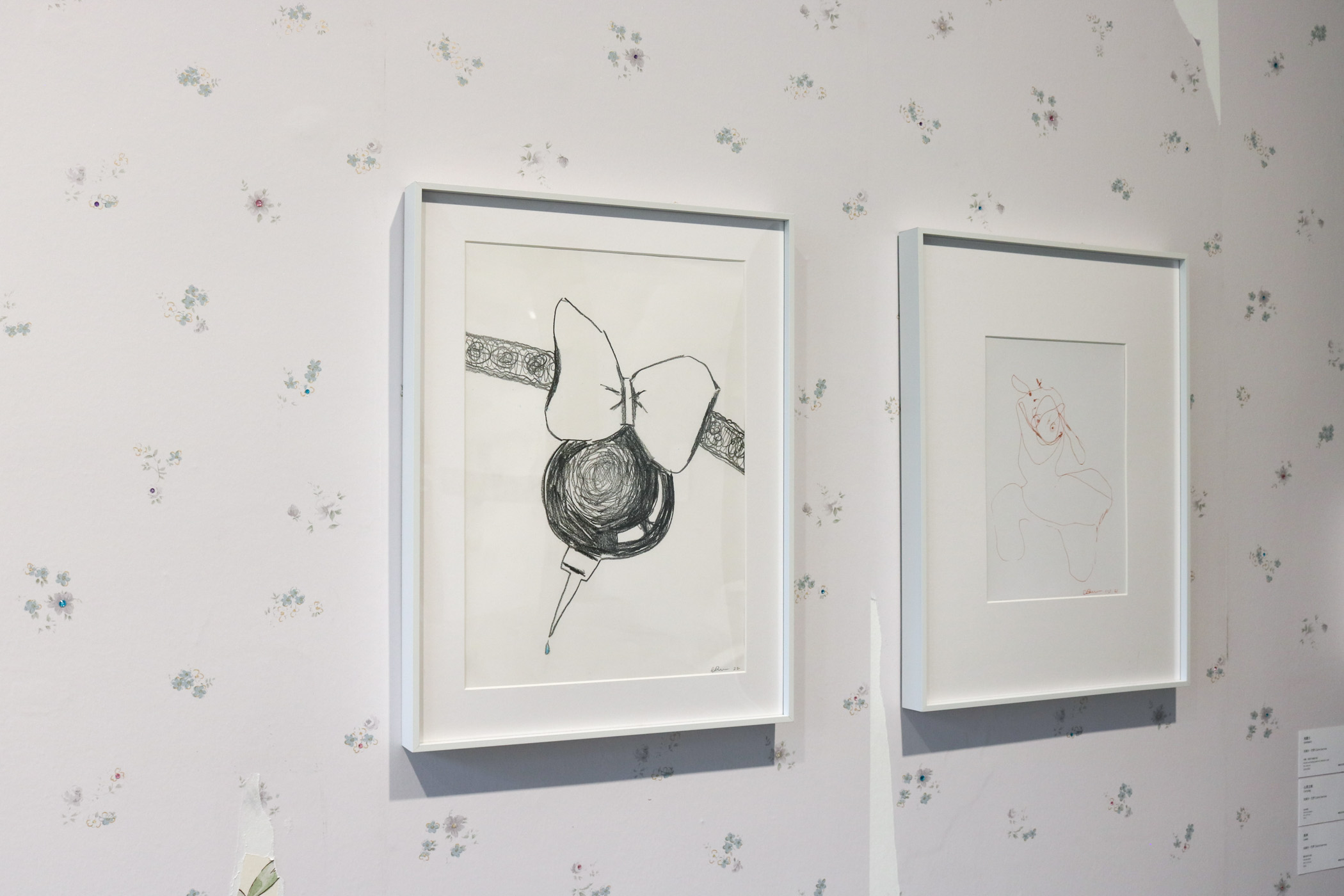
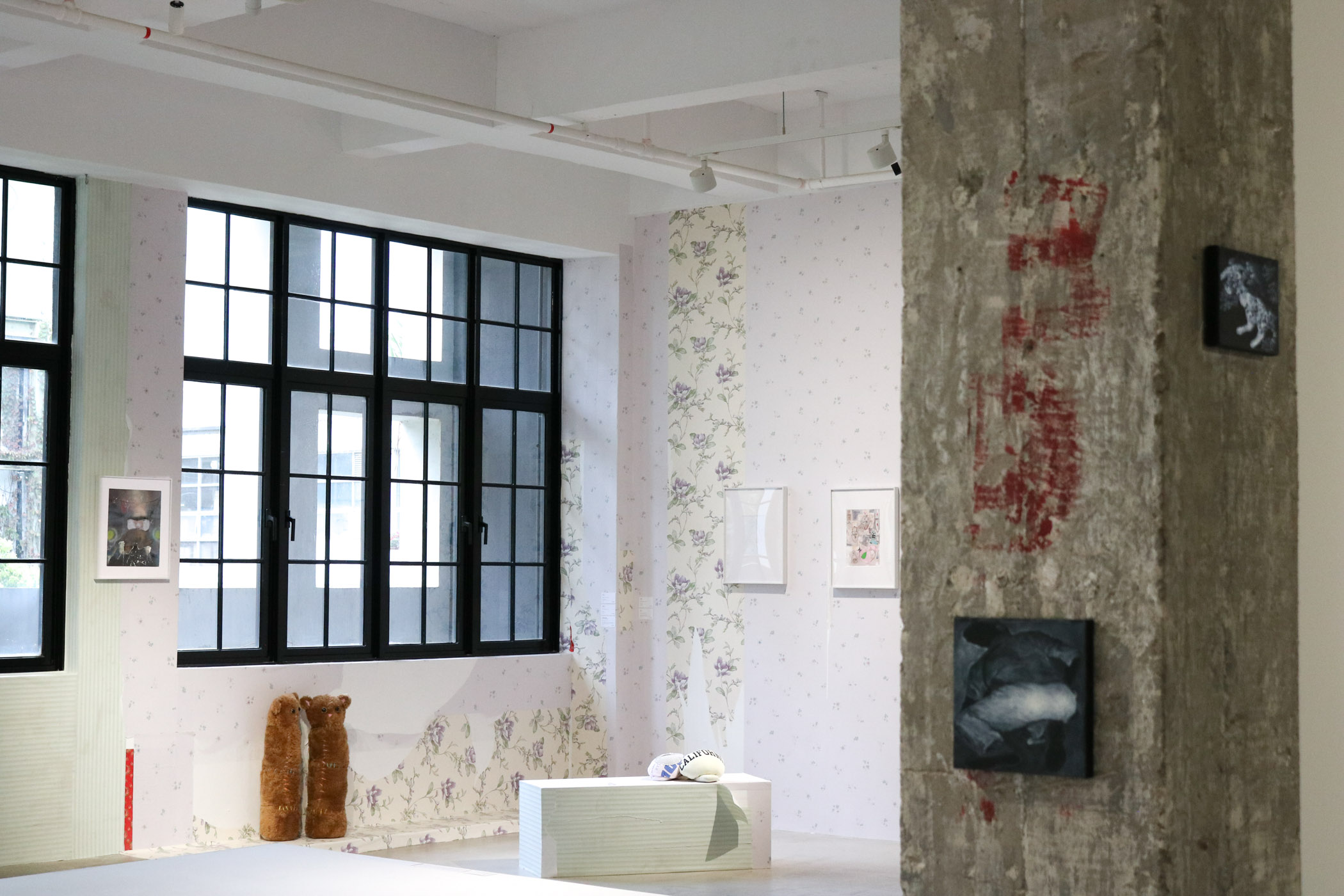
Claire Barrow grew up in an industrial town in North East England, where Disney animations, metal punk, and cheap plastic toys formed her earliest aesthetic language. She has always wanted to construct ‘the sort of place you would only get trapped in during a dream’—you realise the layout is wrong and the scene is absurd, yet you cannot leave. California Pizza Slippers is a soft sculpture stuffed with pyjamas, scented with lavender and chamomile detergent. It objectifies the ‘comfort of home’ into a bizarre entity entirely divorced from practicality; it is gentle, but also hollow. The Nite Drawings series represents a different state of mind: casual pencil sketches done before bed. Their clumsy yet honest lines capture the most intimate moments of doodling behind bed frames or on schoolbooks, recorded after all performative layers have been stripped away.
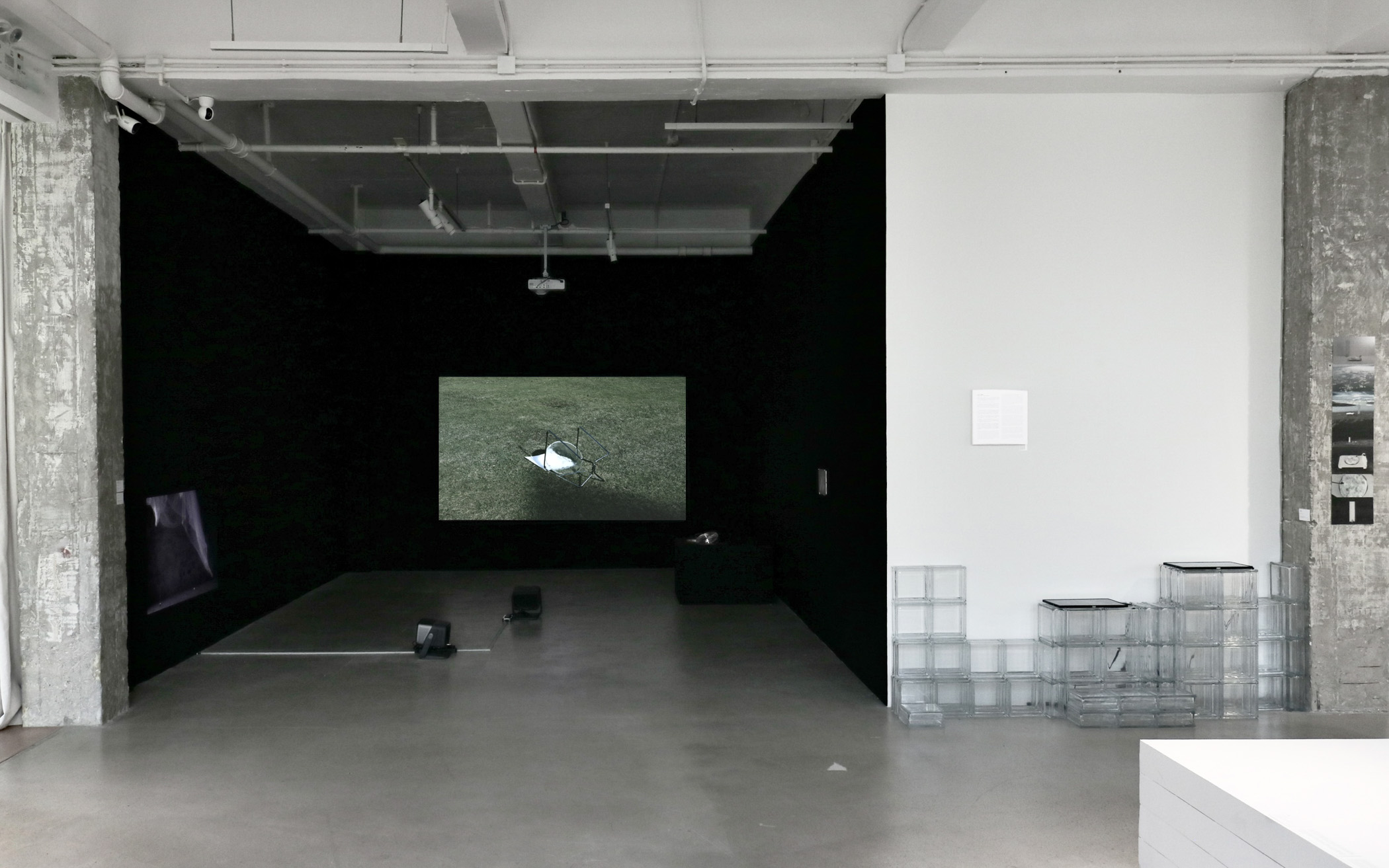
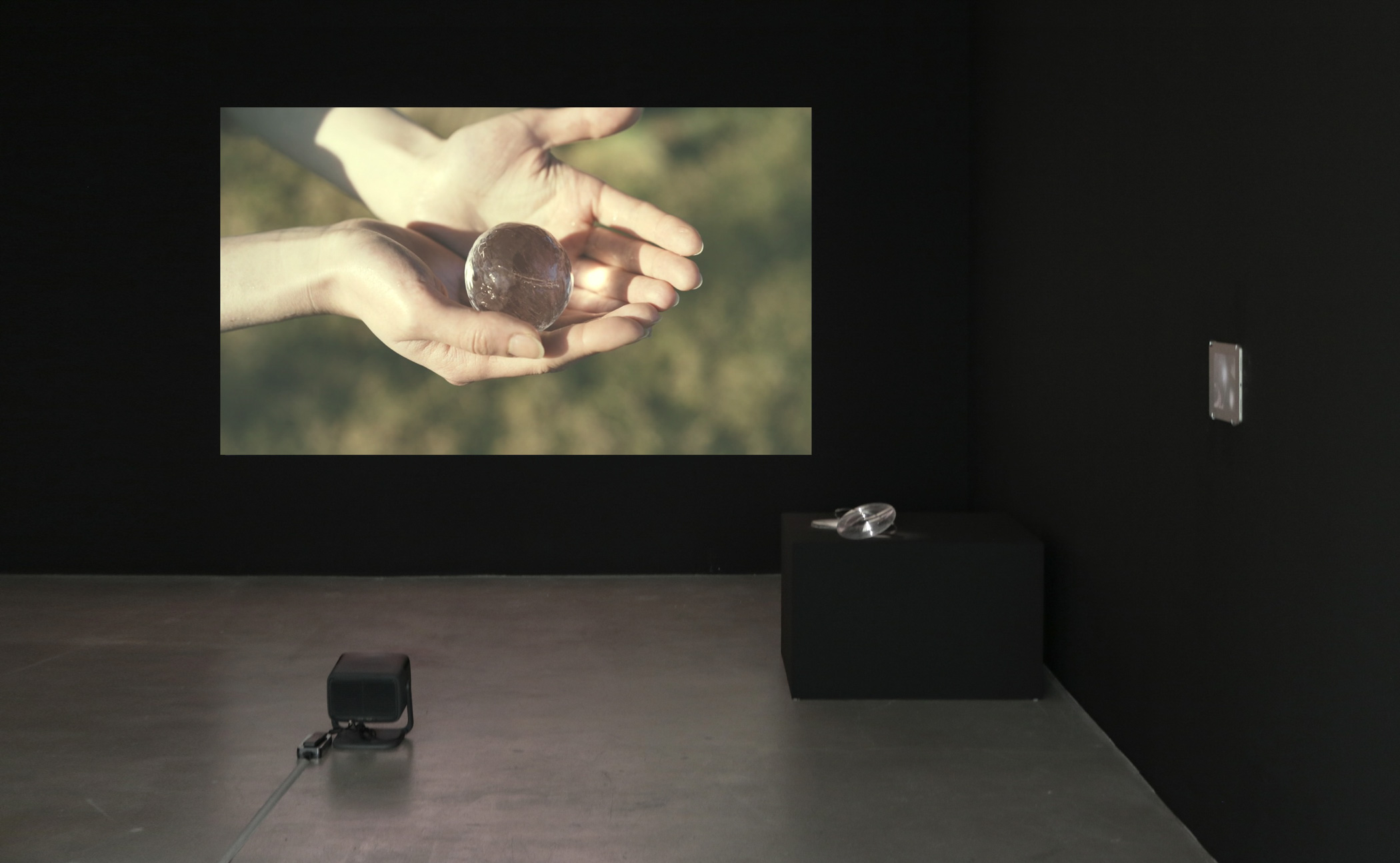
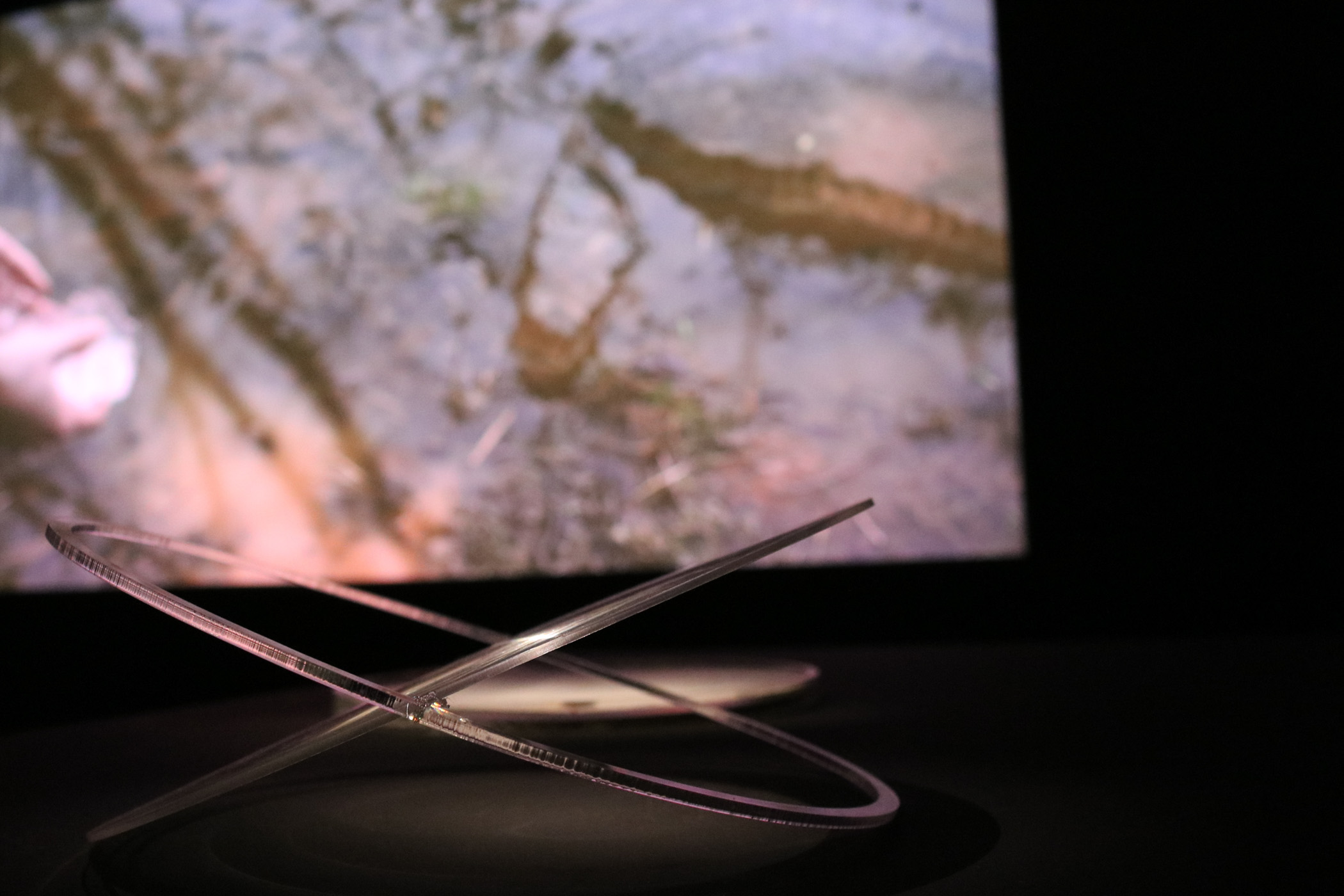
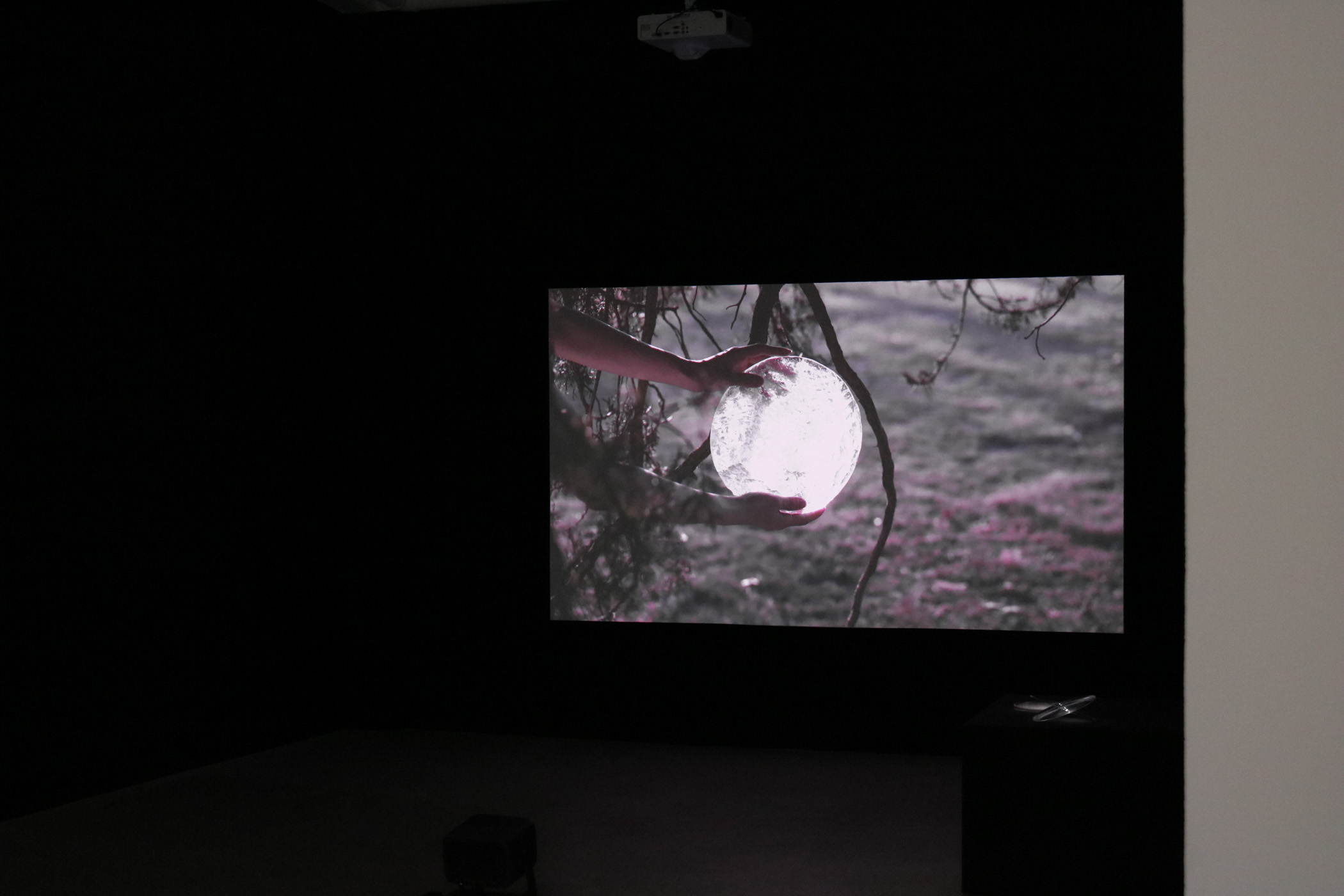
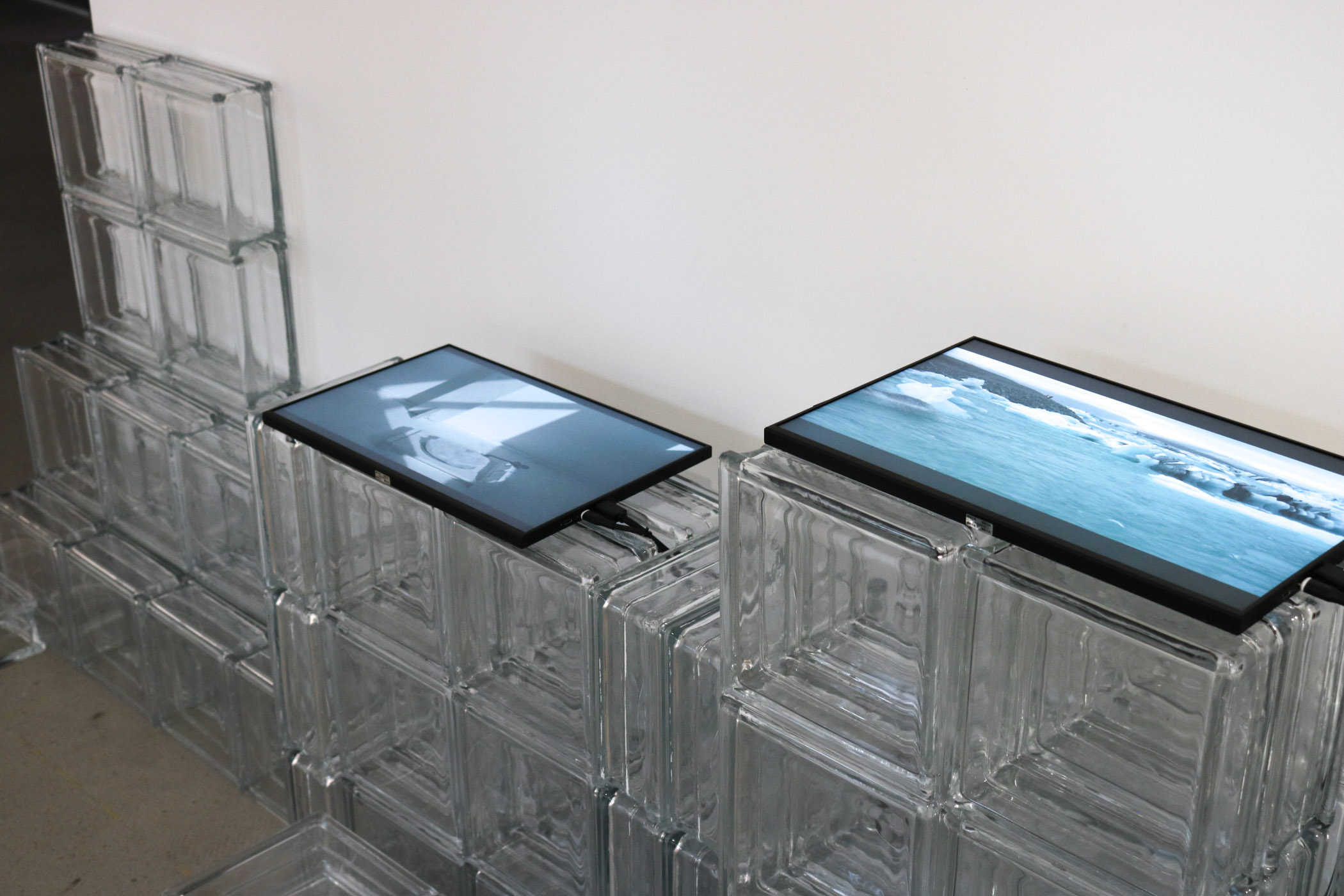
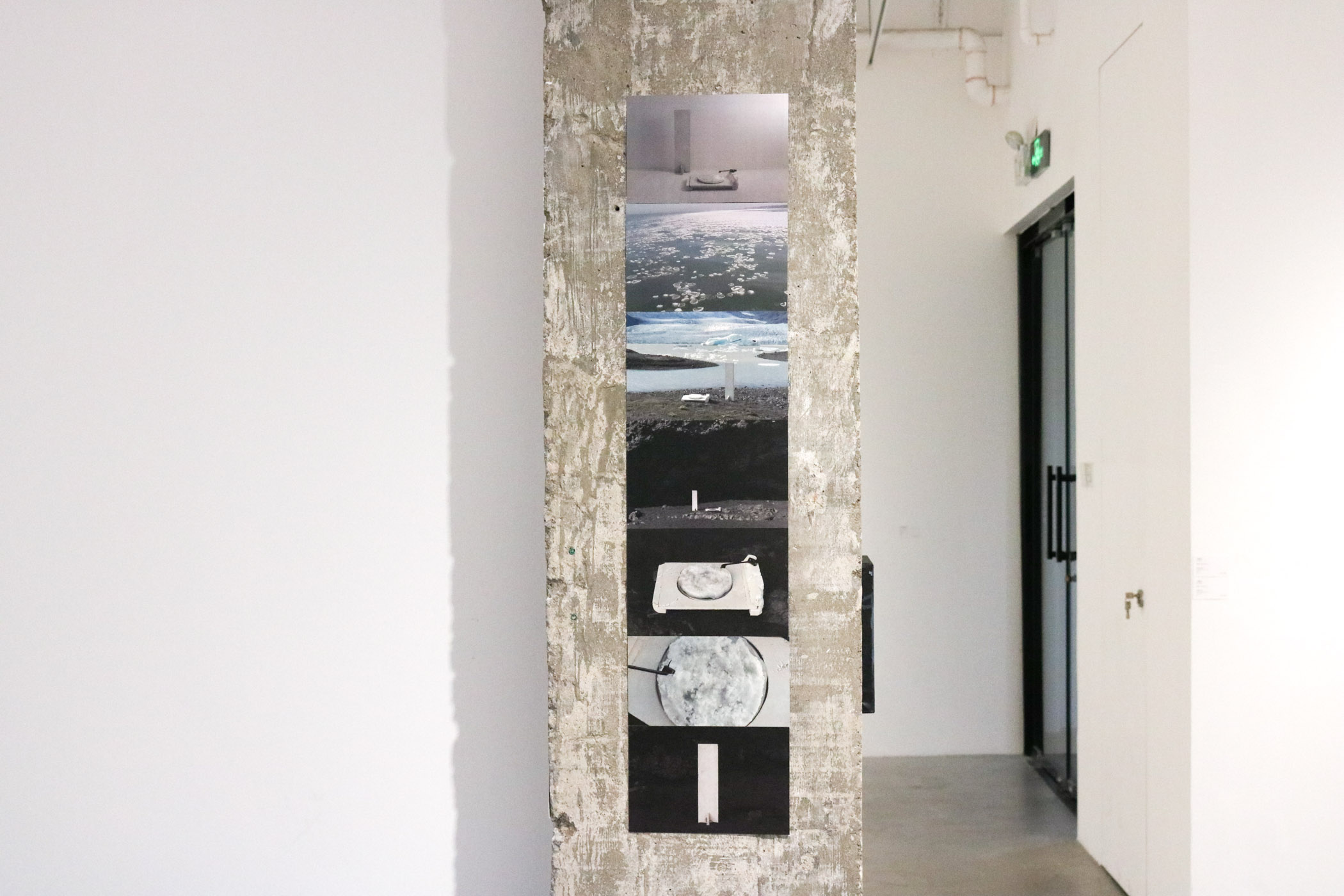
Huanzhe Hu observes all of this from a much broader coordinate system. She set up a concrete-cast record player on a black volcanic beach in Iceland; as the ice melts, the sound vanishes with it. The two are structurally identical, serving as each other’s terminus. Drifting Record captures the instant pancake ice forms in the ocean, a moment inaccessible to any microphone: it is too fleeting, too immense. I am told that within human databases, you cannot find the sound of ice drawing near to itself. At the very thinnest edge of the human audio archive, she uses Google deep learning to imagine a sound most of us can never heard, casting it into concrete like a monument of an indeterminate era.
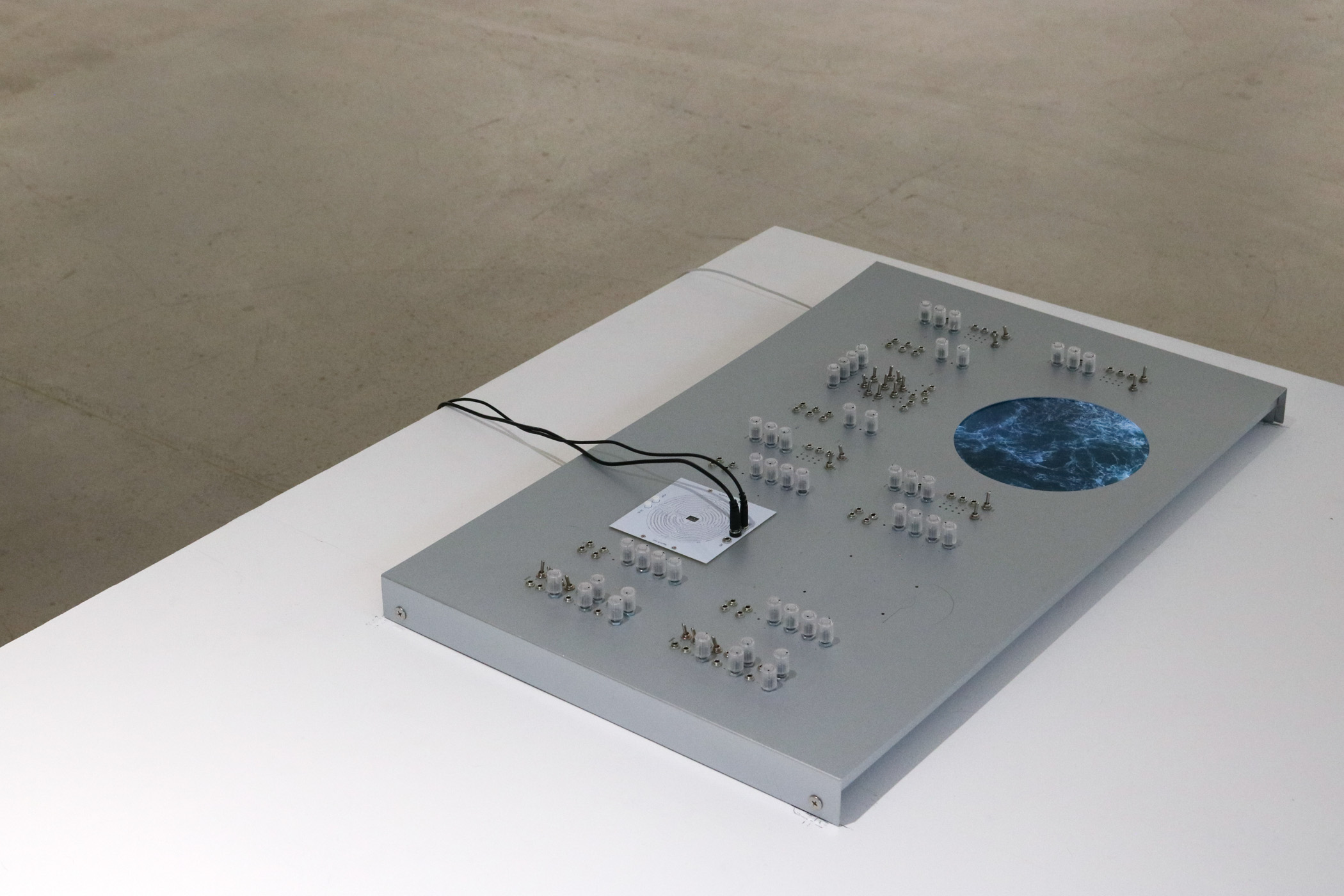
Her new work descends into the giant whirlpools deep within the ocean. Using a multi-channel sound system mounted on a drone, she translates the fathomless underwater rotational system into a ‘playable’ medium. In her universe, rotation is the fundamental logic for understanding all things: ice spins into being, galaxies spin into being, and perhaps desire, too, slowly spins into shape within some force field we have yet to name.
‘Mǐ’ ’s third meaning is the wind blowing across a meadow—everything leans in the same direction simultaneously. There is no resistance, nor can it be called submission. ‘Mǐ mǐ’ is exactly this sort of room: you enter, certain things begin to permeate you, and by the time you leave, the wind has already passed.
